
Why Storytelling Works Better Than Selling in Your Business
Why Storytelling in Business Builds Connection
Why does storytelling matter in business?
Storytelling in business helps people understand the experience behind what you offer. A relevant, honest story can show why your work matters, make a problem easier to recognise, and give someone a natural reason to begin a conversation.
There is a moment in business that we do not always talk about: the middle.
You have moved beyond the excitement of beginning. You are posting, sharing, learning, and trying to stay consistent. Yet somewhere along the way, showing up begins to feel disconnected from the reason you started.
I remember thinking, “I’m doing everything right… so why doesn’t this feel right?”
I had become so concerned with finding the right words that I was losing touch with my own. What I wanted was to connect with people—to share something useful, listen to their experiences, and help where I could.
That recognition changed how I wanted to communicate.
Why Storytelling in Business Builds Connection
An offer tells someone what is available. A story can help them understand where it fits in their life.
You might explain what prompted you to create a resource, describe a difficulty you learned to work through, or share a small moment that changed how you approached your work.
Those details give people something concrete to consider. They may recognise a familiar frustration or discover that you care about something they value, too.
SCORE’s guide to brand storytelling for small businesses discusses using stories to communicate business values and connect those values with customers’ interests. SCORE
A story still needs to be relevant. Before sharing one, ask:
“What might this help someone understand?”
That question keeps the reader’s needs close to the heart of your message.
The Shift From Finding Perfect Words to Sharing Something Useful
For a long time, I thought communicating well meant finding the right hook, wording, or strategy.
There is value in learning how to write clearly. But I also needed to recognise my own voice in what I shared.
When I began drawing more from what I had lived and learned, I had something more meaningful to say. I could explain why a particular challenge mattered to me, what I had tried, and what I would approach differently.
That gave me a starting point beyond another announcement about what I offered.
It also reminded me to listen. Someone’s response could reveal a concern I had overlooked or a question worth exploring in my next post.
A Simple Way to Use Storytelling in Business
You do not need a dramatic success story. An ordinary experience can be enough.
Try these four steps.
1. Begin With a Specific Moment
Choose something you remember clearly: staring at an unfinished email, answering a recurring customer question, or realising that a process had become unnecessarily complicated.
A specific moment gives your reader somewhere to enter the story.
2. Explain the Difficulty
What were you trying to do? What made it challenging?
Keep the explanation honest and proportionate. A small frustration does not need to become a crisis to deserve attention.
3. Share What You Learned or Changed
Describe the useful part of the experience.
Perhaps you simplified your message, asked a better question, or discovered that people needed clearer instructions.
Be precise about what changed. Avoid promising that someone else will have the same result.
4. Offer a Relevant Next Step
Give readers somewhere to go if the subject matters to them.
They might try your suggestion, answer a question, explore a resource, or read about a service.
A clear invitation helps them decide what would be useful.
What This Could Look Like
Imagine someone who has created a weekly meal planner.
A straightforward announcement might say:
“My weekly meal planner is available. It includes planning pages and a grocery list.”
A story could introduce the need behind it:
“By late afternoon, deciding what to cook felt like one more job. I started writing down three dependable meals before making my grocery list. Having those decisions made earlier gave me a place to begin on busy evenings. That small habit became the starting point for this planner.”
The story provides context. The reader still needs practical information about the planner, including what it contains and what it costs.
Storytelling supports a clear offer. It cannot guarantee that the offer will suit everyone.
You Can Be Honest Without Sharing Everything
You get to choose which parts of your experience belong in your business.
A lesson about changing your routine may be useful without including private family details. A customer experience may offer insight, but sharing an identifiable story or testimonial calls for that person’s permission.
Give yourself room to reflect before publishing something personal.
Ask whether the experience is ready to share and whether it serves the reader. Some stories belong in a journal or a trusted conversation first.
Connection Continues After the Post
Publishing a story is one part of communicating.
When someone responds, pay attention to what they actually say. They may want to share a similar experience, ask a question, or simply acknowledge something that resonated.
Let the conversation develop at its own pace.
For me, that is an important part of building a heart-centred business: making room for people’s responses and helping them make informed choices.
Trust also depends on what happens afterwards—clear information, reliable service, and doing what we have said we will do.
Where Technology Can Help
AI tools can help organise notes, suggest an outline, or make a long draft easier to follow.
Your experience and judgement still need to guide the message.
Start with something real you want to communicate. Review any suggested wording carefully, check factual claims, and change phrases you would never naturally use.
A useful question is:
“Would I say this to someone sitting across the table from me?”
If the answer is no, keep working until the words feel like yours.
Explore the Heart-Centred Entrepreneur Series
These questions run through my Heart-Centred Entrepreneur Series:
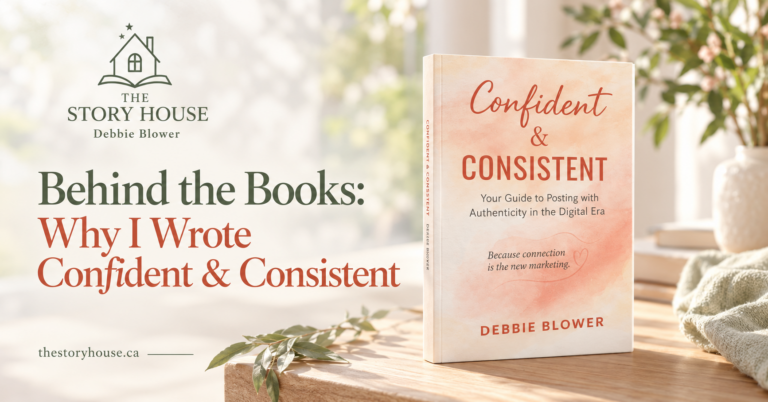
- Confident & Consistent explores showing up with greater confidence and a sustainable approach.
- Inbox Influence focuses on email communication and building relationships over time.
- Social Selling & Conversational AI explores using digital tools while keeping human connection central.
You can explore Heart-Centred Entrepreneur Room.
My hope is that these resources help you communicate with greater clarity and build a business you feel comfortable standing behind.
A Gentle Place to Begin
Before writing your next business post, think of one question someone has asked you recently.
What experience helped you understand that question? What did you learn that might make their next step easier?
Begin there. Share enough of the story to make the lesson clear, then offer something useful.
You may discover that the words come more naturally when you know who you are trying to help.
What is one experience that changed how you connect with people in your business?
Debbie Blower 💛
Author/Illustrator
Founder of The Story House
Stories that inspire. Words that heal.