Nurturing Imagination Through Storytelling
Nurturing Imagination Through Storytelling Begins With Noticing
How can storytelling nurture imagination?
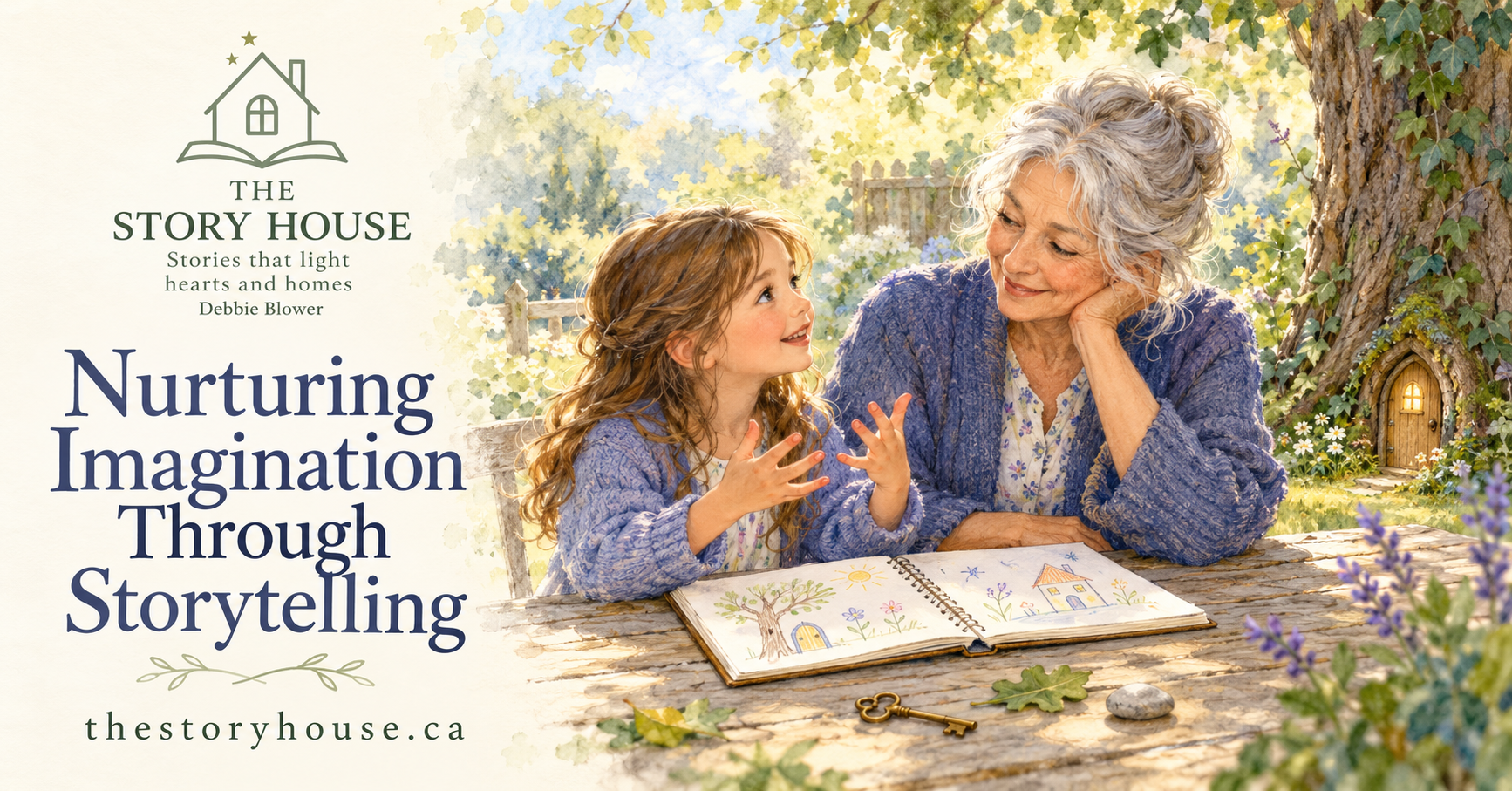
Nurturing imagination through storytelling begins with noticing, wondering, and exploring possibilities. An ordinary object, a remembered moment, or a simple “what if?” question can become the beginning of a story children and adults create together.
A small stone rests beside the garden path.
To one person, it is simply a stone. To someone else, it might be a dragon’s missing tooth, a message from a hidden kingdom, or something a tiny traveller has been searching for.
That is a lovely place for storytelling to begin.
You do not need a finished idea or an elaborate activity. You need something that catches your attention—and room to wonder what it could become.
Nurturing Imagination Through Storytelling Begins With Noticing
Story ideas often grow from things we almost pass by.
A feather caught on a fence. A strange shadow. A forgotten photograph. A door we have never noticed before.
Invite a child to look closely at one thing.
Ask what they notice before asking them to invent anything. What colour is it? Where was it found? Does it remind them of something?
Then introduce a possibility:
“What if there were a story behind it?”
The answer does not have to arrive immediately. Sometimes a child needs time to handle an object, draw it, or talk through several ideas.
Adults can join in, too. Shared curiosity makes this an activity you explore together.
Try a Simple Story Seed Activity
Choose an everyday object or a picture of one. A key, leaf, button, postcard, or interesting stone can offer plenty to explore.
Let the child choose what interests them, then follow these five steps.
1. Give the Object a Possibility
Ask one question:
What if this key opened something unexpected?
Perhaps it opens a tiny cupboard inside a tree. Perhaps it unlocks a box that has been waiting for a hundred years.
Let the child change the idea. The key might turn out to be something else entirely.
2. Imagine Who Finds It
Ask:
Who discovers it, and why do they notice it?
The finder could be a child, an animal, a grandparent, or a creature with a very unusual job.
You might offer an idea if the child wants help, but leave the choice with them.
3. Add Something to Wonder About
Ask:
What makes the discovery interesting?
Maybe the key feels warm. Maybe it hums whenever it approaches the garden gate. Maybe someone else is looking for it.
A question gives you somewhere to go next without requiring the whole story to be planned.
4. Take Turns Exploring What Happens
Offer one idea, then invite another.
“I think the key begins to glow beside the old tree. What do you think happens?”
Listen to the answer before adding more. If the child takes the story somewhere unexpected, follow their curiosity for a while.
You are discovering what you can create together.
5. Save Something You Want to Remember
Draw a scene, record a few words, or write down a favourite sentence.
You might save only this:
The key hummed every time someone told the truth.
That is enough to return to another day. A story seed does not have to become a finished book in one sitting.
Give Imagination More Than One Way to Respond
Some children enjoy describing ideas aloud. Others prefer drawing, moving toys around, building a setting, or acting out a character.
Offer a way of responding that suits the child.
A cardboard box might become a boat. Building blocks might form a village. A drawing might reveal a character the child had not thought of before.
You can ask them to explain one detail:
“Tell me about this part.”
Avoid turning every creative activity into a writing task. Sometimes the talking, building, and pretending are the experience you want to share.
When a child wants to record the story, you can help them take that next step.
Let Books Become Invitations to Create
Reading together offers another starting point.
An illustration might leave something unexplained. A character might make a surprising choice. The ending might leave the child wondering what happens tomorrow.
Try asking:
- “What might be beyond that hill?”
- “Who else could live here?”
- “What would change if the story happened in winter?”
Choose one question and see whether it interests the child. There is no need to interrupt every page.
The Public Health Agency of Canada’s guidance on encouraging literacy suggests playful approaches such as character voices, sound effects, discussing pictures, and making illustrated stories together. Canada.ca
A shared book can be something to enjoy in its own right—and sometimes an invitation to create something new.
Make Room for Different Ideas
When several people hear the same prompt, they may imagine very different stories.
One child sees an adventure. Another sees something funny. Someone else wants to know who lost the key and whether they are worried.
That variety gives us opportunities to listen.
Ask what interests each person about their idea. In a group, you could create separate stories from the same object or take turns building one together.
Agree that everyone can contribute, and leave room for someone to pass.
A quiet child may prefer drawing their idea before sharing it. Another may want to tell you privately first.
Bring Family Memories Into the Conversation
Storytelling can also begin with something real.
A photograph, recipe card, familiar place, or household object may prompt a memory worth sharing.
You could tell a child what you remember, then ask what they wonder about.
Keep the difference between memory and invention clear:
“This part really happened. Now, shall we imagine a different adventure beginning in the same place?”
That lets you enjoy both family history and creative storytelling without confusing them.
An ordinary conversation can become a chance to learn something about one another.
A Story Starter When You Need One
If you would welcome a fresh prompt, visit the Story Starter Generator in the Imagination & Story Growing Room.
Explore an idea together, change it if you wish, and let the child decide how to respond.
They can talk, draw, build, act, or write.
👉 Try the Story Starter Generator
For a printable activity, My Story Starter Adventure offers another place to begin.
Choose whichever approach feels useful that day.
The Storybuilding Thread at The Story House
This invitation to imagine connects with the roots of my work through The Muse Program.
Art, conversation, and imagination can give children ways into a story before they are ready to put everything into sentences.
That thread continues through The Imagination Series with Sly, including How Stories Grow with Sly and The Stories Hiding Inside.
You can explore the books and storybuilding resources here.
My hope is to offer useful starting points while leaving room for each child’s own ideas.
A Gentle Reflection
Look around the room or step outside for a moment.
What catches your attention?
Choose one detail and ask what story might be hiding there. You do not have to develop it completely.
Perhaps today you simply notice something you would usually pass by.
Final Thoughts
Nurturing imagination through storytelling can begin in ordinary moments.
Notice something. Ask a question. Listen to an unexpected answer. Give the idea room to change.
Whether you are sharing a book, recalling a family memory, or inventing an adventure around a small stone, you are making space to create together.
Sometimes the next story begins with:
“What do you think this could be?”
Debbie Blower 💛
Author/Illustrator
Founder of The Story House
Stories that inspire. Words that heal.