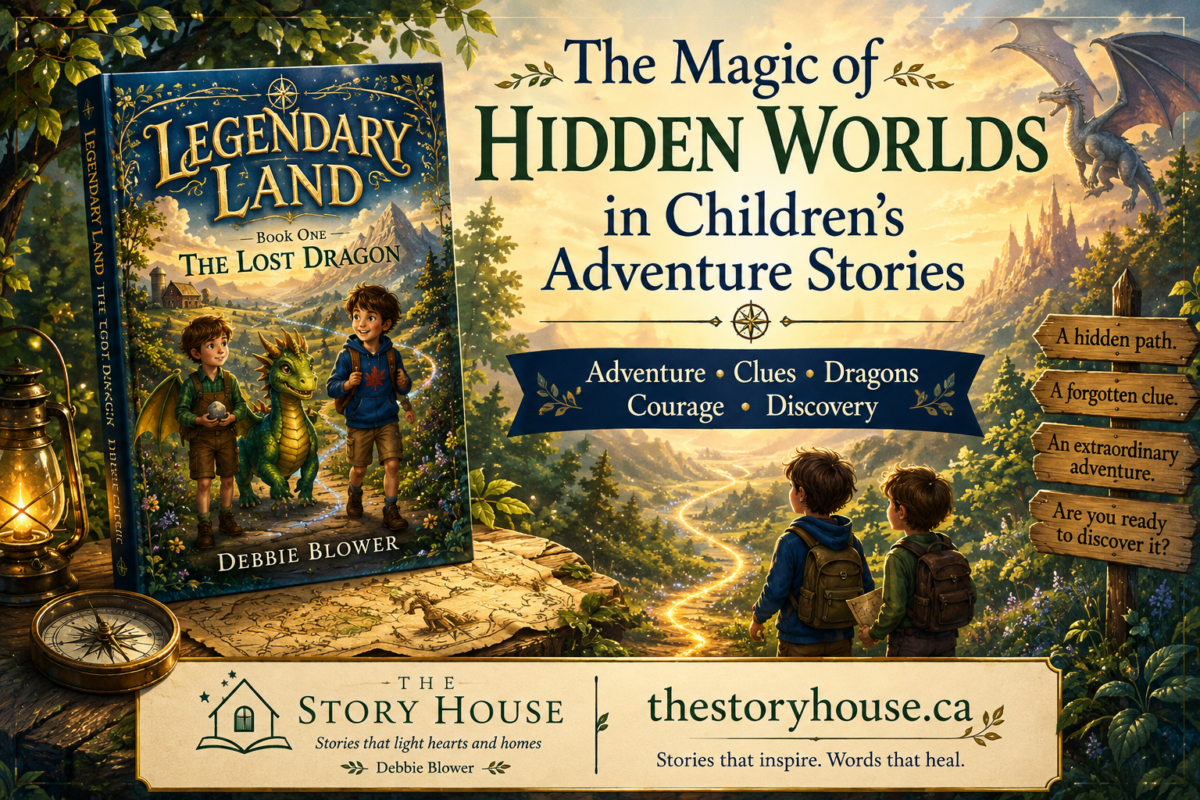
The Magic of Hidden Worlds in Children’s Adventure Stories
Children love adventure stories with hidden worlds because they turn familiar places into places of possibility. A park, a trail, a pond or a forgotten corner can suddenly hold a clue, a mystery or the beginning of something extraordinary.
That is part of the magic of children’s adventure stories.
They invite a child to look at an ordinary place and wonder:
What if there is more here than anyone realizes?
A pathway may lead somewhere unexpected. A stone may carry a strange marking. Something glimpsed between the trees may not be quite what it seemed.
The real world has not disappeared.
Imagination has simply opened another door.
That idea sits at the heart of Legendary Land: The Lost Dragon, where mystery, discovery and imagination begin close to home rather than in a world completely removed from a child’s own experience.
Sometimes the greatest adventures begin in places everyone else has walked past.
Ordinary Places Can Become Extraordinary
One of the things I love about hidden-world stories is that they often begin somewhere familiar.
A park.
A forest trail.
A backyard.
A pond.
A place a child might recognize from their own life.
Then one small thing changes.
A clue appears. Someone notices something unusual. A familiar path suddenly raises a question that was not there before.
The ordinary becomes extraordinary.
I think that closeness is part of what makes this kind of adventure so inviting for children. They do not have to imagine themselves travelling across the universe before the story can begin. They can imagine something remarkable hiding behind the next tree or around the corner of a place they already know.
It gives the child permission to look again.
To notice.
To wonder.
And perhaps to see their own surroundings with a little more imagination after the book is closed.
The Public Health Agency of Canada encourages reading and storytelling partly because books can introduce children to things beyond their everyday experience and help stretch their imaginations. It also suggests connecting stories to places and experiences children already know. Canada
That is very much what hidden-world stories do.
They begin with something the child understands — and then ask what else might be possible.
Why Clues Make Adventure Stories So Much Fun
A good clue changes the relationship between the reader and the story.
Suddenly the child is not simply waiting to be told what happens next.
They are wondering.
What does that mean?
Who left it there?
Where will it lead?
Did I notice something the characters missed?
Mystery gives young readers something to participate in.
They can make guesses, look for patterns and change their minds as new pieces of the story appear.
That active involvement was already an important part of your original post: children are not only watching the adventure unfold; they are mentally joining the search. Pasted markdown
In Legendary Land: The Lost Dragon, discovery does not come all at once. The children have to pay attention and follow what they find.
That allows the mystery to grow naturally.
And it gives the reader another reason to turn the page.
Hidden Worlds Encourage Children to Notice
Children can be wonderfully observant.
They notice the strange shape of a branch.
A mark on a rock.
A narrow opening between trees.
Something half-hidden beside a path.
A sound an adult may have walked straight past.
Adventure stories can honour that way of seeing the world.
They suggest that curiosity matters and that small details may be worth noticing.
Not every adventure has to begin with a crash, an explosion or something enormous.
Sometimes it begins with something almost missed.
A footprint.
A stone.
A symbol.
A whisper.
A path that should not be there.
That is part of the pleasure of a hidden world: the discovery belongs to the person who was paying attention.
Why Dragons Still Belong in Children’s Imaginations
There is something wonderfully flexible about a dragon.
A dragon can be frightening or gentle.
Powerful or vulnerable.
Lost.
Misunderstood.
Dangerous.
In need of help.
The moment a dragon appears, questions follow.
Where did it come from?
Why is it hiding?
Can it be trusted?
Is someone searching for it?
Does it need rescuing?
Those questions make dragons perfect companions for adventure stories because they bring wonder with them while still allowing the story to explore very human emotions.
A magical creature can still be lonely.
It can still be frightened.
It can still need friendship.
A child can encounter something impossible while recognizing feelings that are completely real.
That combination of fantasy and emotional familiarity is one of the reasons imaginations can soar through adventure stories, which can stay with us long after the details of the plot begin to fade.
Adventure Stories Can Give Courage Somewhere to Grow
Adventure is not only about excitement.
It often gives children a safe place to think about courage.
The character does not need to begin fearless. In fact, I think some of the most meaningful children’s adventures happen when the character is uncertain.
They do not know what lies around the corner.
They make a choice anyway.
They ask for help.
They try again.
They discover that courage does not mean never feeling afraid.
Sometimes it simply means taking the next step while the answer is still uncertain.
That is an important kind of bravery for children to see.
In Legendary Land: The Lost Dragon, adventure and discovery create room for those moments. The mystery may be imaginary, but the questions underneath it are very real:
Can I do something even when I am unsure?
Can I help someone who needs me?
Can I trust a friend?
What happens when something I first feared turns out to be different from what I expected?
Those are large ideas wrapped inside an adventure a young reader can enjoy.
Friendship Gives the Adventure Its Heart
A mystery may start the journey, but relationships are often what make an adventure memorable.
Children’s characters do not all need to be brave in exactly the same way.
One child may rush forward.
Another may stop to think.
One may notice the clue.
Another may ask the question no one else thought to ask.
Someone may bring humour when everyone is worried.
Someone else may notice that another character needs encouragement.
That matters because it shows children that there is more than one way to contribute.
The loudest child does not always solve the mystery.
The fastest person does not always find the answer.
Sometimes the careful observer sees what everyone else missed.
Sometimes the child who was unsure at the beginning discovers courage because someone believed in them.
Friendship gives adventure stories heart because the characters do not simply reach the destination together.
They change along the way.
Hidden Worlds Can Help Make Reading Feel Like Discovery
Not every child falls in love with reading because someone tells them reading is important.
Sometimes they need the right story.
They need the dragon.
The clue.
The question.
The secret door.
The thing that makes them think, I need to know what happens next.
Reading Rockets points out that personal connection and choice can play an important role in reading motivation. Children are more likely to engage when they have opportunities to choose material that genuinely interests them. Reading Rockets
That is why I think high-interest adventure stories can be such a useful doorway for some young readers.
For one child, the hook might be animals.
For another, humour.
For another, facts.
And for another, it may be a hidden path and a lost dragon.
The important thing is finding the story that makes reading feel less like an assignment and more like discovery.
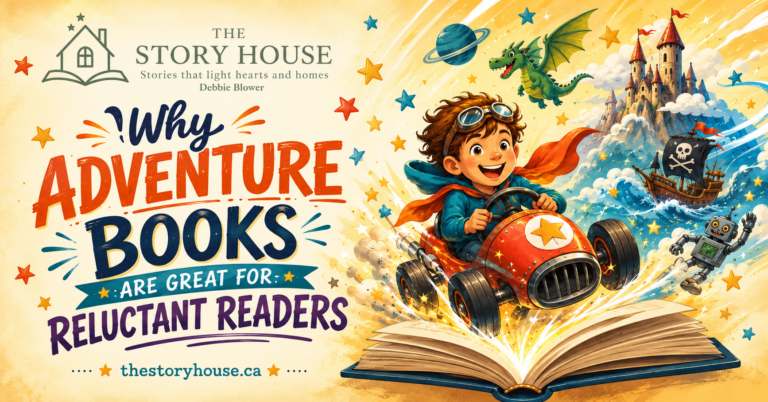
You may also enjoy Why Adventure Books Are Great for Reluctant Readers as you continue exploring that idea.
Legendary Land and the Power of “What If?”
Many of my favourite story ideas begin with two very small words:
What if?
What if an ordinary place is not as ordinary as everyone thinks?
What if something is hidden there?
What if a strange clue leads somewhere?
What if the creature everyone would expect to fear actually needs help?
“What if?” gives imagination room to move.
It does not require a child to know the whole story before beginning.
One question can be enough.
That is something I have always loved about helping children grow stories. An idea does not have to arrive fully formed. Sometimes we only need the first doorway.
Legendary Land: The Lost Dragon begins from that same place of possibility.
A familiar world.
Something unexpected.
A mystery.
And the question of what might happen if someone is curious enough to follow the first clue.
Who Might Enjoy Legendary Land: The Lost Dragon?
This story may especially appeal to young readers who enjoy adventure, dragons, mysteries, clues, friendship, hidden places and stories where something extraordinary is waiting inside an ordinary setting.
It can also suit children who enjoy having a question to follow through a story rather than being given every answer immediately.
A secret to uncover gives the reading somewhere to go.
A clue creates anticipation.
And a character’s discovery can become the reader’s discovery too.
If you know a young reader who likes that kind of story, you can explore Legendary Land: The Lost Dragon here.
Turn the Adventure Into a Family Conversation
One of the nicest things about sharing a children’s story is that it does not have to end when the book closes.
A few gentle questions can keep the imagination going.
You might ask:
- What clue would you have followed first?
- Which character would you want beside you?
- What would you do if you discovered a hidden path?
- What kind of dragon would you imagine?
- Where near your home would you hide the entrance to a secret world?
There are no right answers.
That is the fun of it.
Children may invent a completely different ending, create another dragon, draw a map or decide that the tree at the end of the garden would make the perfect entrance to somewhere no one else knows about.
The Public Health Agency of Canada also encourages adults to talk with children about what is happening in stories and ask open-ended questions such as what they think will happen next. Canada
That is how one story can become the beginning of another.
Frequently Asked Questions About Children’s Adventure Stories
Why are hidden worlds so popular in children’s adventure stories?
Hidden worlds combine something familiar with something unexpected. Children can recognize the park, forest, trail or home setting while imagining that something extraordinary might exist just beyond what everyone else can see.
Why do mystery and clues help keep children interested?
Clues give readers a question to follow. Instead of simply waiting for the answer, children can make predictions, search for patterns and wonder what the characters will discover next.
Can adventure stories be good for children who are reluctant to read?
They can be, particularly when adventure, mystery or fantasy matches that child’s interests. Reading motivation is highly personal, so finding a story that genuinely captures the child’s curiosity can matter more than choosing a particular genre for every reader. Reading Rockets
What can parents or grandparents ask after reading an adventure story?
Try questions that invite imagination rather than test comprehension. Ask what the child would have done, which clue they noticed, where they would hide a secret world or how they imagine the adventure continuing.
Final Thoughts
Children’s adventure stories can turn an ordinary walk into the possibility of discovery.
They encourage children to notice details, follow clues, wonder what might happen next and imagine worlds that are close enough to feel possible.
They can explore courage without requiring the hero to be fearless.
They can show that friendship makes difficult journeys easier.
And they can remind children that curiosity is often where an adventure begins.
That is the heart behind Legendary Land: The Lost Dragon.
Sometimes a place is only ordinary until someone looks a little closer.
And sometimes the first clue is all a story needs.
Debbie Blower 💛
Author/Illustrator
Founder of The Story House