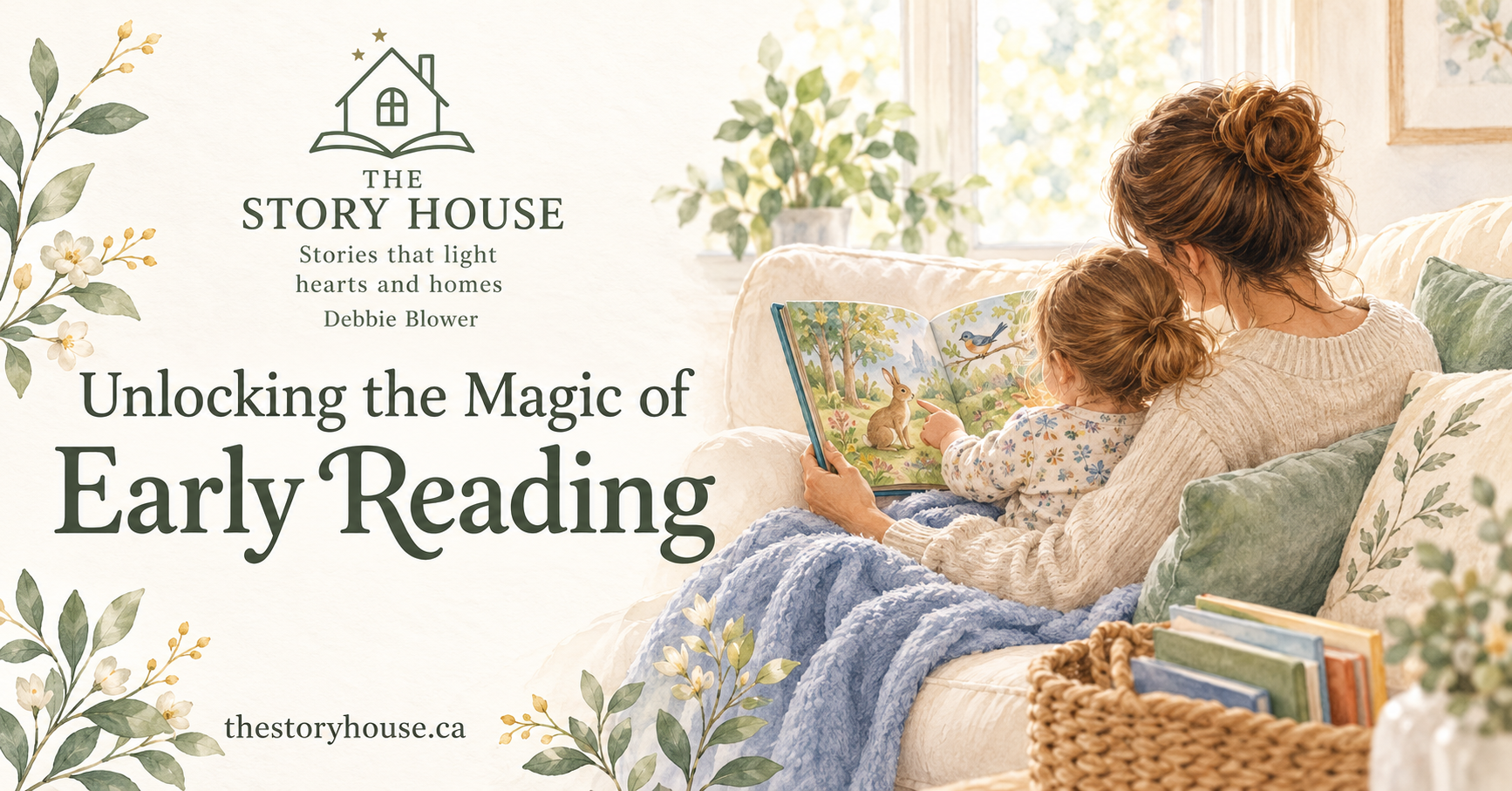
Unlocking the Magic of Early Reading
Simple ways to bring books and storytelling into everyday life
Early Reading Begins With Shared Moments
There’s something beautiful about watching a child become interested in a book.
A small finger finds an animal in the picture. A familiar phrase brings a smile. Before you turn the page, a voice beside you announces what happens next.
These are the moments I love about early reading—the curiosity, the conversation, and the pleasure of sharing a story.
We can begin enjoying books with children long before they can read the words themselves. We can look at pictures, listen, wonder, and make room for stories in the ordinary rhythm of our days.
Early Reading Begins With Shared Moments
Reading together offers time to pay attention to the same thing.
You might follow the words on the page, talk about an illustration, or pause because your child has spotted something that reminds them of their own day.
The American Academy of Pediatrics recommends reading aloud, following children’s interests, and letting them choose books—even when they choose the same favourite repeatedly. Its guidance also encourages families to keep reading enjoyable and stop when a child loses interest.
You can explore its tips for helping children enjoy reading aloud here. HealthyChildren.org
For me, that is an encouraging place to begin: a book, a little time, and room to enjoy being together.
Five Ways to Make Books Part of the Day
1. Keep a Few Books Within Reach
A small basket beside the couch or a low shelf can make choosing a book easy.
Offer a manageable selection and change a few titles occasionally. Keep favourites available, too. A well-loved book doesn’t need to be retired because you have read it many times.
2. Find a Rhythm That Fits Your Family
Perhaps a story fits naturally before bed. Perhaps mornings or a quiet afternoon work better.
Choose a moment you can return to without making it another demanding task. Some days you may share a whole book. Other days, a few pages will be enough.
3. Leave Room for Your Child’s Ideas
Try a comment such as, “That rabbit looks worried,” and see what your child notices.
You can wonder aloud about what might happen next or invite them to supply a familiar line. Let their response guide you; every page doesn’t need a question.
4. Make It Comfortable
A reading space can be as simple as somewhere you can sit together and see the pages clearly.
A blanket or cushion may be lovely, but you don’t need a specially decorated corner. Choose a place that works for the child and the moment.
5. Notice What They Enjoy
Pay attention when a child laughs at a character, points out a detail, or asks to hear a story again.
You might say, “You noticed something I missed,” or, “I loved hearing your idea about the ending.”
Let your interest be part of the encouragement.
Seven Small Storytelling Invitations
Stories can continue after the book is closed. Try whichever of these fits your day:
- At breakfast: Invent a tiny adventure for a piece of fruit.
- Around the table: Share something funny or surprising that happened.
- On a walk: Wonder who might have left a footprint.
- In the kitchen: Tell the story behind a familiar family recipe.
- With paper and crayons: Draw a character and describe their day.
- At the library: Explore the shelves or ask about family story sessions.
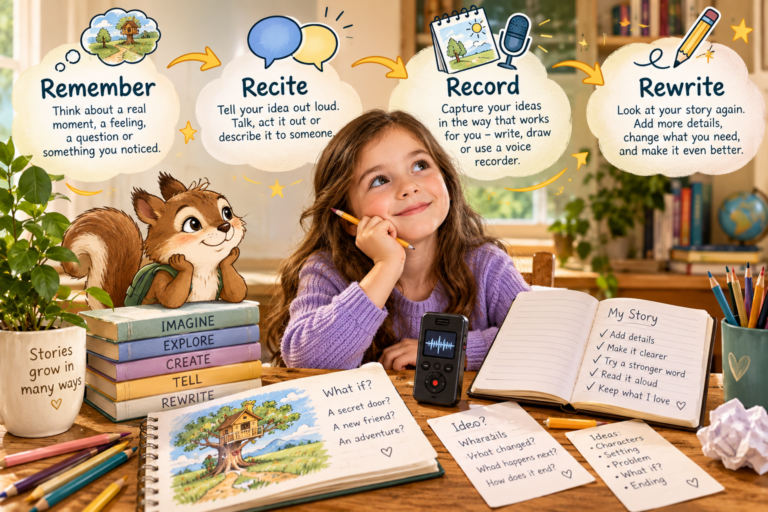
- With a voice recording: Capture a child telling a story in their own words.
These are invitations to play. Follow the ideas that interest your child and leave the others for another day.
For more inspiration, visit The Story House’s Imagination and Story Growing Resources.
A Few Questions Families Often Ask
What if my child won’t sit through a whole book?
Try sharing a picture or a few pages. You can return later. The experience doesn’t have to end at the final page to have been worthwhile.
Should we keep reading aloud once a child reads independently?
Yes. Shared reading can continue alongside independent reading. The American Academy of Pediatrics encourages families to keep reading aloud after children learn to read for themselves. HealthyChildren.org
Can we use digital books?
You can share a digital book together, talk about its pictures, and pause for conversation. Choose a format that works for your family and keeps the attention on enjoying the story together.
What if learning to read feels difficult?
Shared story time can remain enjoyable while a child receives help with reading skills. If you have concerns, talk with their teacher about what they are noticing and what support would help.
A Gentle Place to Begin
You don’t need a perfect routine or a large collection of books.
Choose one story. Sit together. Notice what catches your child’s attention.
If you’re looking for your next shared read, explore the Children & Youth Room. You may also enjoy Why Fables Still Matter, a reflection on the conversations stories have opened in my own family.
The magic of early reading lives in these small opportunities to listen, imagine, and spend time together.
One book. One conversation. One moment you’re glad you made room for.
Debbie Blower 💛
Author/Illustrator
Founder of The Story House
Stories that inspire. Words that heal.