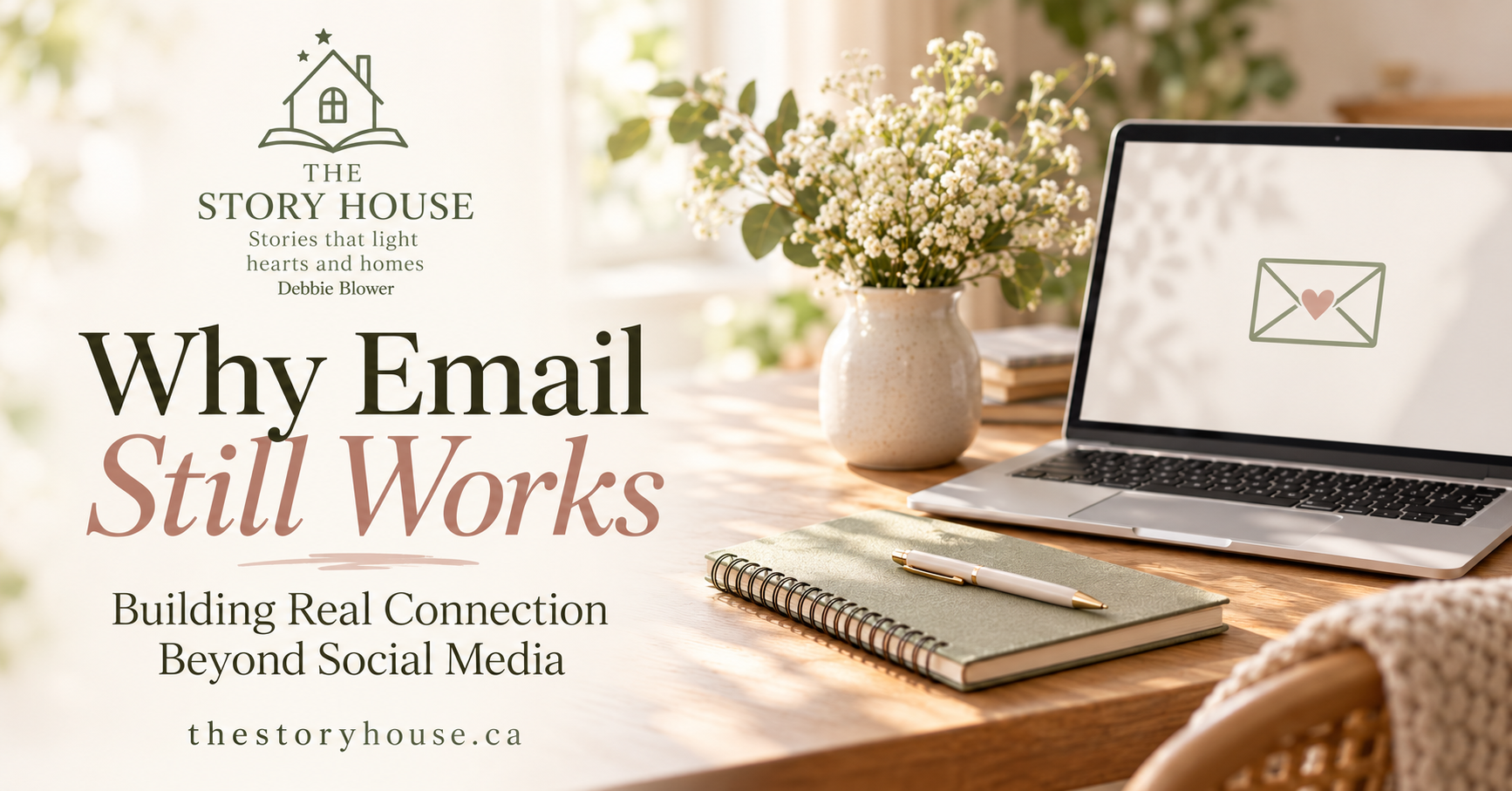
Why Email Still Works
Building Real Connection Beyond Social Media
Why Email Still Works Alongside Social Media
Does email marketing still work?
Yes. Email marketing can help businesses stay connected with people who have chosen to hear from them. Useful messages, clear expectations, and a manageable sending schedule give those relationships opportunities to grow beyond individual social media posts.
Social media may introduce someone to your business. Email gives you another way to continue the conversation.
That matters when you put care into what you create. You want people to have a way to return, explore your work, and hear about something that may interest them.
An email address does not create a relationship by itself. What you send—and how thoughtfully you send it—makes the difference.
Why Email Still Works Alongside Social Media
Social media can be a wonderful place to share ideas, start conversations, and introduce your work to new people.
But you cannot assume that everyone who follows you will see every update. If someone misses a post, they may also miss a resource, event, or announcement they would have enjoyed.
Email offers another route for staying in touch with subscribers. You can choose when to send a message, explain something in more detail, and link directly to a useful page on your website.
An inbox has distractions, too. Messages can be filtered, overlooked, or left unread. The opportunity is to give people a reason to welcome yours.
Think about the emails you look forward to receiving. Perhaps they offer a useful idea, a thoughtful story, or information you would otherwise have missed.
That is a helpful starting point for your own messages.
Begin With a Clear Invitation
Before deciding what to write, consider what someone is agreeing to receive.
“Join my list” gives very little information. A clearer invitation explains the subject and the expected rhythm.
For example:
“Receive a monthly note with practical ideas for creating meaningful content and building customer relationships.”
Someone can then decide whether that sounds useful to them.
If you offer a free workbook, make the download and any ongoing email subscription clear. A person should understand whether they are requesting a resource, subscribing to future messages, or choosing both.
Mailchimp’s explanation of permission in email marketing emphasizes clear, verifiable permission to receive marketing communications. Its guidance also explains why recognizable sender details and an easy-to-find unsubscribe link matter. Mailchimp
Whatever email platform you use, begin with respect for the person receiving the message.
Welcome People Before Asking More of Them
A welcome email is an opportunity to follow through on your invitation.
Thank the person for joining, deliver anything you promised, and explain what they can expect next.
It can be simple:
Subject: Welcome—here is your Connection Builder Workbook
Thank you for joining me here. Your workbook is ready below.
I created it to help you pause, think about the people you want to reach, and plan content with greater intention.
[Download your workbook]
You will also receive the monthly business notes you subscribed to, with practical ideas and encouragement for building meaningful connections.
Start with one workbook prompt and give yourself time to explore it.
Debbie 💛
This example assumes the person has subscribed to those monthly notes. Adjust the wording to match what your own form promises.
Before using a welcome message, test the signup process, the email, and the download link. A warm introduction works best when the resource is easy to find.
Write One Useful Message at a Time
You do not need to fill every email with everything happening in your business.
Choose one main purpose.
Perhaps you want to answer a question, share an experience, explain a resource, or introduce a new book. Give that subject enough attention to make the message worthwhile.
A simple structure is:
- Begin with a relevant observation or question.
- Share one useful idea, explanation, or story.
- Offer a clear next step.
For example, an email about feeling stuck with content could describe a familiar difficulty, suggest writing down three customer questions, and link to an article that helps readers choose their next topic.
The reader understands why the message arrived and what they can do with it.
If you are still clarifying the purpose behind your content, read Why Your Content Isn’t Converting.
Let Stories Give Your Advice Context
Stories can help explain why an idea matters.
A lesson from your work, an observation from your day, or a question that made you think can give the reader a way into the subject.
Choose a story that supports the message. Then make the connection clear.
For example, a story about repeatedly postponing a complicated task might lead naturally into a practical suggestion for simplifying a content routine.
The story gives the advice context. The explanation helps the reader apply it.
You can be personal while keeping appropriate boundaries. Share what serves the reader and what you feel comfortable making public.
For me, this is part of the heart of The Story House: offering words and resources that give people something meaningful to carry into their own lives.
You Can Sell With Clarity and Care
A business email can include an offer.
If you have created a book, service, or resource that may help your subscribers, explain what it offers and who it is for. Give people enough information to decide whether they want to explore it.
A clear invitation might be:
“If planning your emails feels difficult, Inbox Influence offers guidance for creating thoughtful communication and building relationships beyond social media. You can explore the book here.”
That lets the reader make a choice.
Keep offers accurate. Explain relevant details plainly, and use urgency only when there is a genuine deadline.
This approach is something I explore in Inbox Influence: communicating in a way that supports your business while respecting the person reading.
Choose a Schedule You Can Maintain
The right email rhythm depends on your audience, your subject, and the time you have available.
A monthly message may be a practical beginning. A weekly note may suit a business with regular useful updates. Whatever you choose, explain it when people subscribe.
Then leave time to prepare and review each message.
Ask yourself:
- Is there something useful here?
- Does the subject line accurately describe the email?
- Is the main point easy to find?
- Do the links work?
- Is the next step clear?
If maintaining your schedule becomes difficult, review the format and frequency. A shorter, focused message may be easier to prepare and easier for a busy reader to use.
For help creating a sustainable routine, read How to Stay Confident and Consistent Online.
Keep Your Voice When Using Technology
Scheduling tools and welcome-email automations can help you follow through consistently. AI can help organize ideas or suggest ways to simplify a draft.
Review the finished message yourself.
Check the details, remove wording you would never use, and make sure the email fulfils the promise you made to subscribers. If you invite replies, use an address you monitor and make time to respond.
In Social Selling & Conversational AI, I explore how technology can support communication while keeping human judgment and care involved.
The tools should help you deliver the message you intended.
Look at What Happens Beyond the Open
Opening an email is only one part of the experience.
Consider what happens next. Are subscribers visiting the linked article, downloading a resource, asking questions, or exploring an offer?
Read replies carefully, too. They may reveal what people found helpful or what still needs explaining.
Look for patterns across several messages before making a major change. One quiet email gives you limited information.
The purpose of reviewing results is to learn how to make your communication more useful.
Free Download: The Connection Builder Workbook
If you would like help thinking through your message and the relationships you want to build, I created The Connection Builder Workbook.
It includes guided prompts and reflection pages to help you:
- clarify who you want to reach;
- create more intentional content;
- explore ways to build meaningful connection;
- plan a manageable way to stay in touch.
Download The Connection Builder Workbook
Begin with one prompt. Let it help you decide what your next useful message could be.
A Gentle Reflection
Imagine one person opening an email from you during a busy day.
What would make those few minutes worthwhile?
Perhaps a clear answer, an encouraging thought, or a practical idea they can try immediately.
Keep that person in mind as you write. It can help you choose what belongs in the message—and what can wait.
Visit The Heart-Centred Business Room at The Story House
Final Thoughts
Why does email still work?
It gives you a way to continue communicating with people who have asked to hear from you.
Make that invitation clear. Follow through on your promises. Share useful ideas, explain your offers honestly, and choose a rhythm you can maintain.
Over time, those thoughtful messages give people opportunities to understand your work and decide how they want to stay connected.
Debbie Blower 💛
Author/Illustrator
Founder of The Story House
Stories that inspire. Words that heal.