How “What If” Stories Help Reluctant Readers
How “What If” Stories Invite Readers Into an Adventure
“What if” stories can help reluctant readers become curious about a book by taking something familiar and introducing an unexpected possibility. A surprising question gives children something to wonder about—and a reason to discover what happens next.
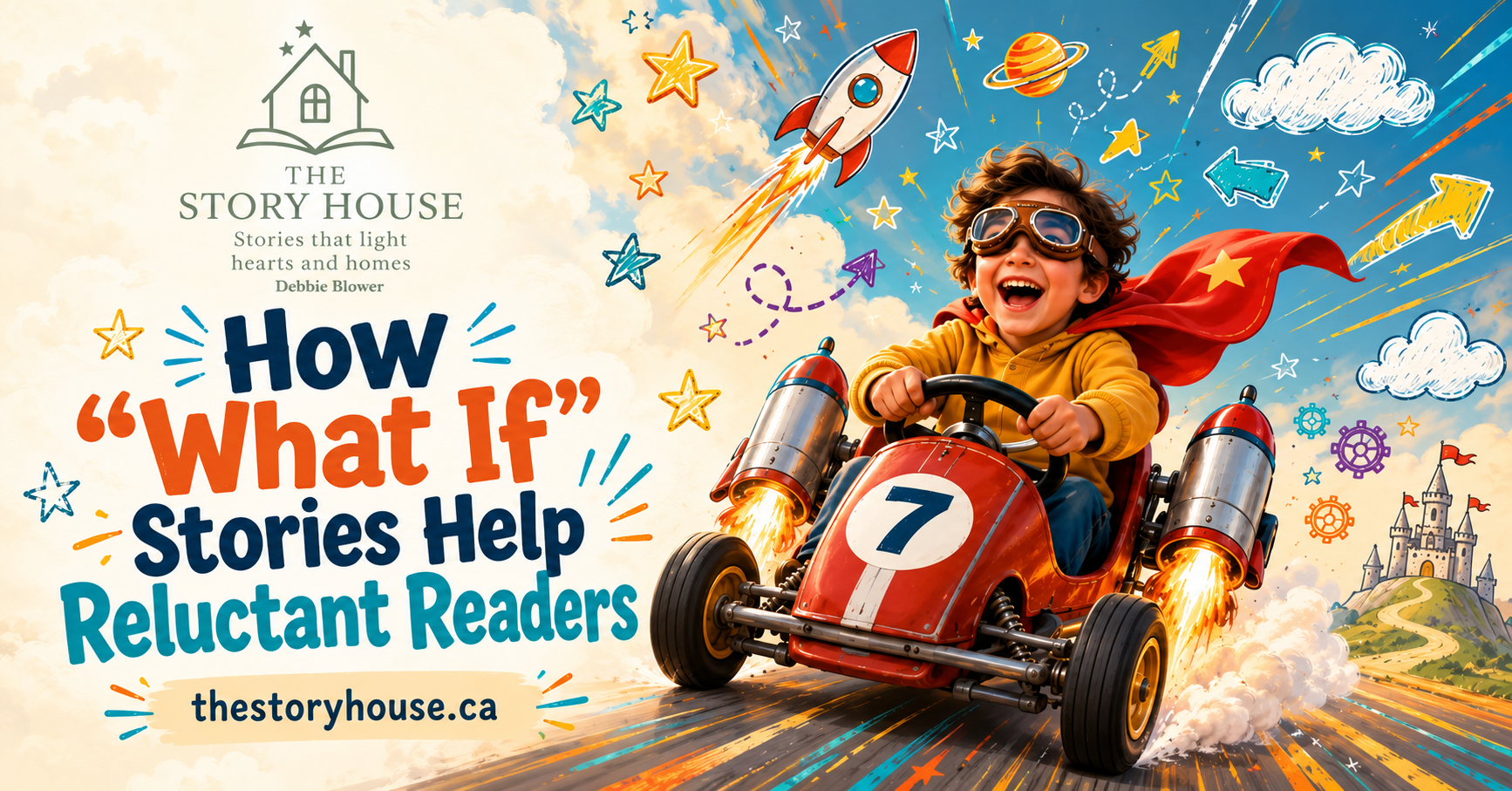
What if a backyard became a racetrack? What if a cardboard box could travel through space? What if a homemade go-kart led to an adventure no one had planned?
For a child interested in those possibilities, the story has already begun before the first page is turned.
Curiosity does not remove difficulties with reading, but it can give us a welcoming place to begin. We can choose a suitable book, offer support and enjoy exploring the question together.
How “What If” Stories Invite Readers Into an Adventure
A “what if” question introduces a change.
A familiar place becomes unfamiliar. An ordinary object does something unexpected. A character discovers that the day will not unfold as planned.
The reader wants to understand what that change means.
Perhaps a child finds a tiny door in a tree. Who lives behind it? Perhaps a toy car begins talking. What does it have to say? Perhaps a map shows a place that should not exist. Will someone try to find it?
These questions offer something specific to follow. For a child who finds it difficult to settle into a story, an intriguing beginning may help capture their interest.
The next step is finding a book whose language, layout and reading demands suit that child.
Begin With Something the Child Already Enjoys
A surprising idea is more inviting when it connects with an existing interest.
A child who loves vehicles may enjoy an unusual invention. An animal lover might wonder what would happen if a dog could explain where it had been. Someone fascinated by nature may be drawn to a mystery in the woods.
We do not have to guess. Ask what they like imagining, building, drawing or talking about.
Reading Rockets’ Finding the Right Book for Your Child offers practical guidance on considering children’s interests and reading abilities, including sharing a book when they need help with the text. www.readingrockets.org
The question that interests one child may leave another unmoved. That helps us learn what to offer next.
Imagination Gives Children Something to Explore
Children can take an ordinary object and imagine a different purpose for it. A blanket becomes a cape, chairs become a mountain range, and a box becomes a place to hide from an approaching dragon.
“What if” stories build on that kind of possibility.
They invite readers to picture something, then consider what might happen because of it. If the bicycle can fly, where does its rider want to go? If the bedroom becomes a jungle, how will the character find the door?
The first surprising idea provides a beginning. The character’s choices help it become a story.
That is part of what I enjoy about writing for children: following an imaginative question far enough to discover the adventure inside it.
Give the Reader a Question Worth Following
Curiosity grows when events connect.
A character tries something. It causes a new problem. Someone notices a detail that changes the plan.
The reader begins forming their own ideas:
Will that work?
What have they missed?
Could there be another way?
When reading together, you can occasionally pause and invite a prediction. Let the child explain their thinking, then see what the author chose.
There is no need to stop constantly or check every answer. Sometimes the child’s response will simply be, “Keep reading!”
For more about stories that create this momentum, explore Why Adventure Books Are Great for Reluctant Readers.
A Go-Kart, a Big Idea and an Unexpected Adventure
That spirit of possibility is part of The Rocket Boosted Go-Kart, a Turbo Minds adventure.
The story follows Jax and his friends through invention, mistakes, discoveries and the challenge of working together. A go-kart project gives them plenty to figure out, and the first attempt does not settle everything.
For children interested in vehicles, building, humour and imaginative science adventures, it may offer an appealing starting point.
You can explore The Rocket Boosted Go-Kart at The Story House or read the Amazon sample.
Looking at a sample together helps you decide whether the story and writing suit your child. A longer book can also become a shared read-aloud.
Reading Together Leaves Room for Wonder
A child may love an adventurous idea while finding the printed words difficult.
Reading aloud lets them enjoy the story without managing every word independently. They can follow the characters, listen for clues and contribute their own predictions.
Reading Rockets’ Reading With Your Child resources encourage enjoyable, interactive read-alouds with conversation about the story and illustrations. www.readingrockets.org
You might ask, “What would you try?” or “Did you expect that?” Then follow the child’s interest.
As a Nana, I value the unexpected conversations that can grow from a story. Sometimes a small detail is the part a child most wants to discuss.
Let Characters Try, Fail and Reconsider
A “what if” idea becomes more interesting when it creates a challenge.
A flying bicycle still needs somewhere to land. A talking toy car might need help. An extraordinary invention may work in a way its creator never intended.
Characters must make decisions, respond to surprises and try another approach when a plan fails.
Readers can consider those choices alongside them. They might disagree with a character or notice a possible solution first.
I like stories that leave room for different strengths. One character may be ready to act, while another needs time to observe. Both can contribute something useful to the adventure.
Enjoyment and Reading Support Can Work Together
Reluctant readers are not all reluctant for the same reason.
Some need help finding a subject they enjoy. Others find the words, page layout or length of a book demanding. A child may have both an interest problem and a reading difficulty.
An imaginative hook can encourage engagement, but it does not replace appropriate reading instruction.
If a child regularly struggles to recognize words, becomes distressed or avoids reading because it feels too difficult, talk with their teacher about suitable support. You can continue sharing enjoyable stories while those needs are addressed.
The aim is to help the child participate without asking them to overcome everything through enthusiasm alone.
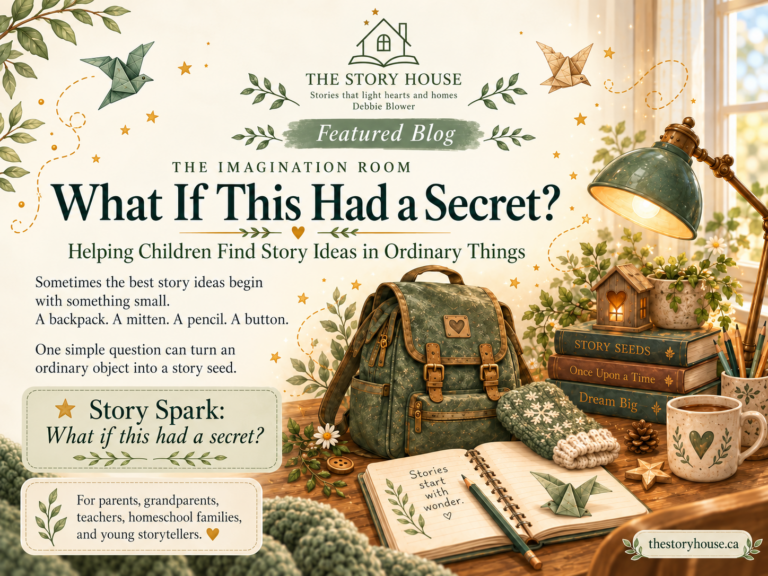
Try a “What If” Conversation Together
Choose one question that fits the child’s interests:
- What if your bicycle could fly?
- What if your toy car could talk?
- What if your backpack opened into another world?
- What if a dragon needed somewhere quiet to sleep?
- What if you invented something that worked differently from your plan?
Let the child answer freely. They can talk, draw or act out an idea.
Then choose one follow-up question:
Who is the story about?
What do they want?
What makes that difficult?
What might they try next?
You do not need to turn the conversation into a writing assignment. Enjoying an idea together is worthwhile in itself.
If the child wants to continue, offer paper and pencils or help record their words.
From Reading an Adventure to Creating One
Sometimes a child finishes a story and wants to change something.
They imagine another ending, invent a new character or wonder what happened after the final page. That response can become a beginning of their own.
You could ask, “What if your character found the invention?” or “What would happen if this adventure took place near our home?”
For ways to develop those ideas, read Storybuilding With Imagination: Helping Children Create Stories.
You can also explore The Imagination & Story Growing Resources, including The Imagination Series with Sly.
These resources offer opportunities to begin through drawing, questions, conversation and writing, with room for a child’s own ideas.
Explore More Stories at The Story House
If your child enjoys imaginative questions, adventures or unusual discoveries, visit Children’s Books at The Story House.
You can browse Free Book Samples before choosing a story.
For more ways to make books welcoming, you may also enjoy How to Help Children Fall in Love With Reading.
Frequently Asked Questions
What are “what if” stories?
They are stories that explore an imagined possibility or unexpected change. A familiar object, place or situation becomes the starting point for something unusual.
How can “what if” stories appeal to reluctant readers?
An intriguing question can make a child curious about what happens next. The story is most useful when it also suits their interests and reading skills, or when someone can read it with them.
Do these stories have to be fantasy?
No. A “what if” question can begin a realistic story too. What if a new child joined a team, a plan changed or someone found an unexpected message?
Can we explore these stories without writing?
Yes. Children can talk, draw, build or act out an idea. Writing can follow if they want to develop it further.
Will an exciting story solve a reading difficulty?
No. Interest can help a child engage, but persistent difficulties need appropriate support. Shared reading allows them to enjoy stories while their reading skills develop.
A Gentle Reflection
Adults often recognize an object by what it does. Children may immediately imagine what else it could do.
A box becomes a spaceship. A path becomes a journey. A homemade vehicle becomes the beginning of a much bigger adventure.
“What if” stories make room for that way of seeing.
For a reluctant reader, one interesting question may be an invitation to look inside a book, listen to a chapter or ask for the next page. With suitable support, we can follow that curiosity together.
What if this is a story they want to explore?
Debbie Blower 💛
Author/Illustrator
Founder of The Story House
Stories that inspire. Words that heal.