What Does It Mean to Live from the Heart of the Kingdom?
Understanding the Beatitudes in Everyday Life
The Heart of the Kingdom in the Beatitudes
What does it mean to live from the heart of the Kingdom?
Living from the heart of the Kingdom means allowing God’s character and priorities to shape our attitudes, choices, and relationships. In the Beatitudes, Jesus describes a life marked by dependence on God, mercy, sincerity, peacemaking, and a deep desire for righteousness.
These teachings reach into ordinary life.
They touch the conversation we would rather avoid, the grief we carry quietly, the apology we need to offer, and the decision to act with integrity when taking a shortcut would be easier.
They also challenge our assumptions about what it means to be blessed.
A life close to God is not necessarily comfortable or admired. The Beatitudes make room for mourning, longing, and costly faithfulness alongside the promises of God.
The Heart of the Kingdom in the Beatitudes
The Beatitudes appear at the beginning of Jesus’ Sermon on the Mount in Matthew 5:1–12.
Jesus names people the world might overlook or underestimate: those who recognize their need, those who mourn, the meek, and those who face opposition for doing what is right. He speaks blessing and promise into their lives.
You can read the Beatitudes in Matthew 5:1–12 here. Bible Gateway
For this reflection, I want to consider how those words can shape the way we live today.
The Beatitudes are not a ladder we climb to earn God’s love. Yet they ask something meaningful of us. They invite us to bring our hearts before Him and allow our responses to be changed.
Poor in Spirit: Recognizing Our Need for God
Being poor in spirit begins with humility before God.
We acknowledge that we cannot make ourselves sufficient through knowledge, achievement, or the appearance of having everything together.
In everyday life, that may begin with an honest prayer:
Lord, I do not know how to handle this. Please give me wisdom.
It may also mean receiving help, admitting a mistake, or listening when we would rather defend ourselves. Dependence on God gives us room to stop pretending.
Those Who Mourn: Bringing Our Sorrow to God
Jesus makes room for people who grieve.
We do not have to hide sorrow to appear faithful. We can bring loss, disappointment, and our grief over what is broken into God’s presence.
Sometimes living this Beatitude means allowing someone to sit beside us when words are difficult. Sometimes it means becoming that quiet companion for another person.
We do not need to explain away someone’s pain before offering care. We can listen, pray, and remain present.
The Meek: Responding With Gentleness and Strength
Meekness can be mistaken for having no voice.
But gentleness can require considerable courage, especially when we feel misunderstood or provoked.
An everyday expression might be pausing before answering a hurtful comment, speaking firmly without humiliating someone, or allowing another person to finish before responding.
We can tell the truth with care. We can hold a conviction without treating another person with contempt.
Those Who Hunger and Thirst for Righteousness: Wanting What Is Right
This Beatitude asks us to consider what we deeply desire.
Do we want to appear right, or are we willing to be changed by what is right?
That question can reach into our work, spending, conversations, and treatment of others. It may prompt us to correct something inaccurate, honour a commitment, or speak up when someone is being treated unfairly.
A hunger for righteousness gives our faith practical expression. It moves beyond good intentions into choices.
The Merciful: Making Room for Compassion
Mercy becomes personal when another person disappoints us.
We may be quick to explain our own mistakes while giving someone else very little room to be human.
Practising mercy can mean listening before assuming, offering help without shaming, or choosing not to repeat an embarrassing story.
Mercy does not make wrongdoing unimportant. It changes how we respond to the person involved, bringing compassion alongside truth and accountability.
The Pure in Heart: Becoming Honest Before God
Purity of heart invites us to examine our motives.
Why am I offering help? Why do I want recognition? Am I saying something because it is true and useful, or because I want to win?
These can be uncomfortable questions, but we can bring them honestly to God.
An ordinary practice might be keeping a promise when no one will notice, acknowledging mixed motives in prayer, or choosing integrity over a more impressive appearance.
The inward life matters, including the parts other people never see.
The Peacemakers: Taking Steps Toward Peace
Peacemaking asks for more than avoiding an uncomfortable conversation.
Sometimes peace begins with an apology. Sometimes it requires careful listening, a truthful explanation, or a boundary that makes a healthier relationship possible.
We cannot control another person’s response. We can consider what responsibility belongs to us.
Is there something I need to acknowledge? Have I understood what was said? Can I approach this conversation with patience and honesty?
Those questions can help us take a faithful next step.
Those Persecuted for Righteousness: Remaining Faithful When It Costs
Jesus also speaks of opposition connected with righteousness and allegiance to Him.
That distinction matters. Every disagreement or criticism is not persecution.
Still, there may be times when doing what is right costs approval, convenience, or opportunity.
Living from the heart of the Kingdom includes asking God for courage in those moments—and for humility to examine our own conduct. Faithfulness does not require us to answer hostility with hostility.
Begin With One Ordinary Moment
Reading all eight Beatitudes at once can leave us wondering where to begin.
Choose one to sit with.
Perhaps you need to acknowledge your dependence on God before making a decision. Perhaps you are being invited to listen more carefully, respond with mercy, or make an honest apology.
Read the relevant verse slowly. Bring your situation into prayer. Consider one response you can practise today.
At the end of the day, reflect without turning the exercise into a scorecard:
- Where did I notice an opportunity to respond differently?
- What did I find difficult?
- Where do I need forgiveness, wisdom, or help?
- What can I bring before God tomorrow?
Spiritual growth includes returning, learning, and beginning again.
A Little Help Beginning Your Prayer
Sometimes we recognize what is stirring in our hearts but struggle to put it into words.
If you would welcome a starting point, visit the Prayer Starters widget in The Faith & Reflection Room. Take a moment with a prompt, then continue in your own words, bringing whatever you are carrying before God.
You might begin by asking Him to help you practice the Beatitude that has stayed with you today—whether that means offering mercy, seeking peace, or acknowledging your need for His guidance.
Explore Prayer Starters in The Faith & Reflection Room
Exploring The Heart of the Kingdom
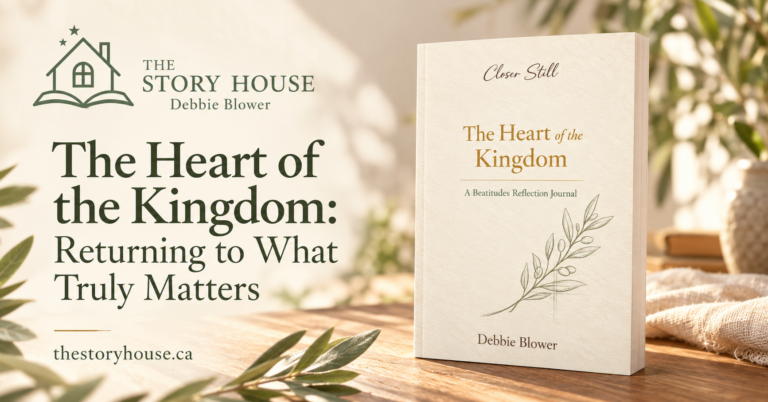
This is the heart behind The Heart of the Kingdom: making space to reflect on the Beatitudes and consider their place in daily life.
I want these teachings to become more than familiar words on a page.
There is value in slowing down long enough to notice where a passage meets our actual circumstances. A journal can give us room to record a prayer, recognize a difficult pattern, or remember something we do not want to rush past.
If you would like to explore the books in the Closer Still Series , you can learn more about the series here.
For more quiet reading and reflection, you can also visit Peaceful Reflections at The Story House.
A Gentle Reflection
Which Beatitude draws your attention today?
Perhaps one brings comfort. Perhaps another unsettles you because it touches something you would rather leave alone.
Take that response into prayer.
You do not need polished words. Begin with what is true, and ask God to help you recognize the next faithful step.
A Prayer for Today
Lord, help me receive the words of Jesus with an open heart. Show me where pride, fear, or resentment is shaping my responses. Teach me to seek what is right, offer mercy, and make peace with honesty and courage. Meet me in my sorrow, and help me depend on You in the ordinary moments of this day. Amen.
Final Thoughts
Living from the heart of the Kingdom allows the words of Jesus to reach beyond what we believe into how we live.
The Beatitudes invite us to depend on God, bring Him our sorrow, seek righteousness, and respond to others with mercy and integrity.
Some expressions of that life will be quiet. Others will require courage that feels anything but comfortable.
Today, we can begin by listening—and allowing one ordinary choice to become a response to Him.
Debbie Blower 💛
Author/Illustrator
Founder of The Story House
Stories that inspire. Words that heal.