How to Help Children Fall in Love With Reading
How can you help children fall in love with reading?
You can help children fall in love with reading by offering books that interest them, reading aloud together, allowing choice and making space for enjoyable reading moments. Children also need books and support suited to their reading skills, so enjoying a story does not become a struggle with every page.
Some children eagerly reach for a book. Others take longer to discover what they enjoy. A funny character, a fascinating animal, an unexpected adventure or a familiar bedtime story may be the beginning.
As an author, illustrator and Nana, I want children to experience books as something worth exploring. We cannot decide which story will become their favourite, but we can give them opportunities to find it.
Help Children Fall in Love With Reading Through Connection
Reading together gives us a chance to pause and share something.
A child may notice a tiny detail in an illustration, interrupt with a question or laugh at a part we did not expect them to find funny. Those responses tell us something about the reader sitting beside us.
Try following their interest before moving on. If they want to study a picture, leave time for it. If they ask to hear a favourite passage again, enjoy the repetition together.
A shared book does not need to become a lesson every time. Sometimes the most valuable thing we offer is our attention.
Start With What Already Interests Them
Think about what the child chooses to talk about, build, watch or draw.
Perhaps they love animals, vehicles, sport, friendship stories, mysteries or unusual facts. A book connected to that interest gives them a reason to look inside.
The starting point does not have to be a traditional storybook. A comic, an illustrated information book, a joke collection or a book about how things work may be more inviting.
Reading Rockets’ Finding the Right Book for Your Child offers guidance on considering children’s interests and reading abilities, including sharing a book when its text is beyond their independent reading level. www.readingrockets.org
You might begin with a simple question:
“What would you like to find out about—or imagine—today?”
Give Children a Choice
It is easy to recommend books we loved ourselves. Sharing those favourites can be lovely, but children also need room to develop their own preferences.
Offer two or three possibilities and let them browse. Notice what catches their attention: the cover, the pictures, a particular character or a surprising title.
A book that seems too silly to an adult might be exactly what makes a child want to read. An easier book may offer welcome enjoyment after a demanding day.
Choosing a book does not have to mean committing to finish it. If it does not hold their interest, talk about what they might like to try instead.
Read Aloud Together
Reading aloud lets children enjoy a story without carrying every demand of reading the words themselves.
They can listen to the dialogue, follow the adventure, explore the pictures and wonder what will happen next. You can read with expression, pause when something surprises them and enjoy the funny parts together.
Reading Rockets’ Reading With Your Child resources encourage enjoyable, interactive read-alouds that include conversation about the words and illustrations. Reading Rockets
Reading aloud can continue after children begin reading independently. They may still enjoy hearing a longer story or sharing a book that would be tiring to read alone.
You do not need special voices or a perfect performance. A comfortable pace and genuine interest are enough to begin.
Make Room for Small Reading Moments
A reading routine does not have to start with a long session.
You could share a picture book before bed, read a few pages while waiting or enjoy one funny passage after supper. A short, welcoming experience gives you something to return to.
Try choosing a time when the child is reasonably comfortable and alert. If reading always arrives when they are exhausted, even a good book may feel like another demand.
You can also listen to an audiobook together during a journey. Listening offers another way to enjoy stories, although it does not replace the instruction and practice a child may need to learn to read print.
The aim is to make room for books in ways that fit your family.
Follow Their Curiosity Into an Adventure
Some children are drawn to a story because they want to solve a mystery or discover what happens when a plan goes wrong.
A question can provide a strong beginning:
What if a homemade go-kart became the start of an unexpected adventure?
That curiosity is part of the heart behind The Rocket Boosted Go-Kart, a Turbo Minds adventure involving invention, humour, teamwork and trying again.
It may appeal to children interested in building, vehicles and imaginative science adventures. You can explore it together and decide whether the writing and reading demands suit your child.
Explore The Rocket-Boosted Go-Kart.
For more ideas, read Why Adventure Books Are Great for Reluctant Readers.
Make Books Easy to Reach
A beautiful reading corner can be inviting, but it is not necessary.
A small basket beside the couch, a library book near the bed or a few books packed for a journey can make reading available when an opportunity appears.
Keep the selection manageable. Rotate books occasionally and leave favourites accessible.
Let children see adults reading too. That might be a novel, a recipe, instructions, a newspaper or information about something you want to understand. Reading has many purposes in everyday life.
A library visit can help children explore those possibilities without needing to buy every book they want to try.
Let the Conversation Grow Naturally
A story can give children something to talk about.
They may disagree with a character, recognize a familiar feeling or wonder why someone made a particular choice.
Try questions that invite their opinion:
- What interested you most?
- Was there a part you wanted to hear again?
- What would you have tried?
- Did anything surprise you?
- What do you think happens after the ending?
There is no need to ask every question. One thoughtful exchange may be enough, and sometimes a child simply wants to listen.
Leave room for their interpretation. Hearing what they noticed is part of discovering how they experience the story.
Enjoy Favourite Books Again
Repeated reading can be part of the pleasure.
Children may enjoy knowing what comes next, anticipating a joke or joining in with familiar words. A favourite book can also become part of a comforting routine.
You can offer new choices alongside the familiar one without treating repetition as a problem.
Perhaps you read the favourite tonight and leave another book nearby for tomorrow. Perhaps the child wants to compare two stories by the same author.
The familiar book may be helping them feel at home with reading.
Encourage Progress Without Making Every Moment a Test
Notice specific things a child is doing.
They might choose a book independently, ask a thoughtful question, persevere with a sentence or explain something they learned.
You can say:
“You went back and tried that part again.”
“You noticed something in the picture that helped us understand the story.”
“I enjoyed hearing what you thought.”
During reading practice, children may need clear help with unfamiliar words. During a shared read-aloud, they may need the freedom to enjoy listening. Both have a place.
If reading repeatedly causes frustration or the child struggles to recognize words, speak with their teacher about appropriate support. Helping children fall in love with reading includes taking those difficulties seriously.
Let Stories Lead Into Creating
Some children want to do something with a story after hearing it.
They might draw a character, build a setting with blocks, make a map or invent a different ending. Follow their interest without requiring an activity after every book.
You can also ask, “What if something changed?”
What if the character took another path? What if someone unexpected arrived? What if the story happened in your backyard?
For ways to explore those beginnings, visit Storybuilding With Imagination: Helping Children Create Stories.
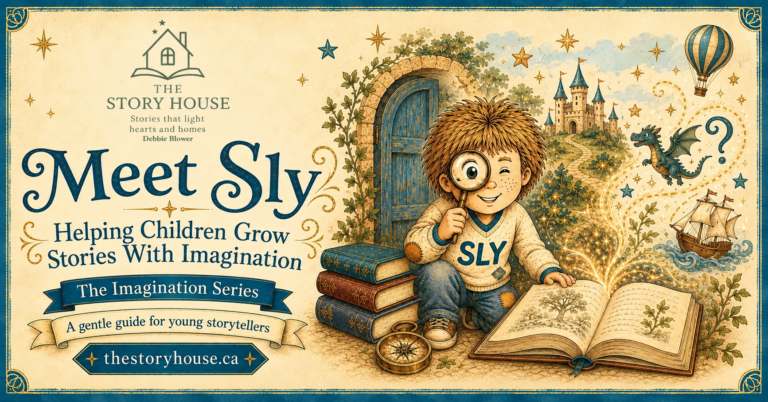
You can also discover The Imagination & Story Growing Resources, including The Imagination Series with Sly.
Explore Children’s Books at The Story House
The Story House brings together stories with adventure, friendship, discovery, imagination and encouragement.
If you are looking for something to share, visit Children’s Books at The Story House.
Take your time. The useful question is whether a particular book feels like a good fit for this child, at this moment.
Frequently Asked Questions
How can I help children fall in love with reading?
Begin with their interests, offer choices and share enjoyable reading moments. Read aloud, make books accessible and ensure children receive any support they need with reading skills.
Does reading aloud still help when a child can read independently?
Yes. Reading aloud offers a shared experience and lets children enjoy stories they may not yet feel comfortable reading alone.
What if my child only chooses comics or funny books?
Those choices tell you something about their interests. Enjoy them together and offer other possibilities without dismissing the books they already like.
Should I make my child finish every book?
Not every book will be a good fit. Talk about what is not working and help them choose another option. School reading tasks may need a separate conversation with their teacher.
What if my child enjoys listening but finds reading difficult?
Continue sharing stories while seeking support for the difficulty. Enjoying a book and learning to read its words are connected experiences, but children may need specific instruction as well as encouragement.
A Gentle Reflection
Think about a book you remember from childhood.
Perhaps you remember a character, a picture or the anticipation of the next chapter. Perhaps you remember who read it and where you sat together.
Those memories are part of what I hope children find through books: something interesting to explore and someone willing to share the experience.
Helping children fall in love with reading can begin with that small invitation.
“Shall we see what this one is about?”
Debbie Blower 💛
Author/Illustrator
Founder of The Story House
Stories that inspire. Words that heal.