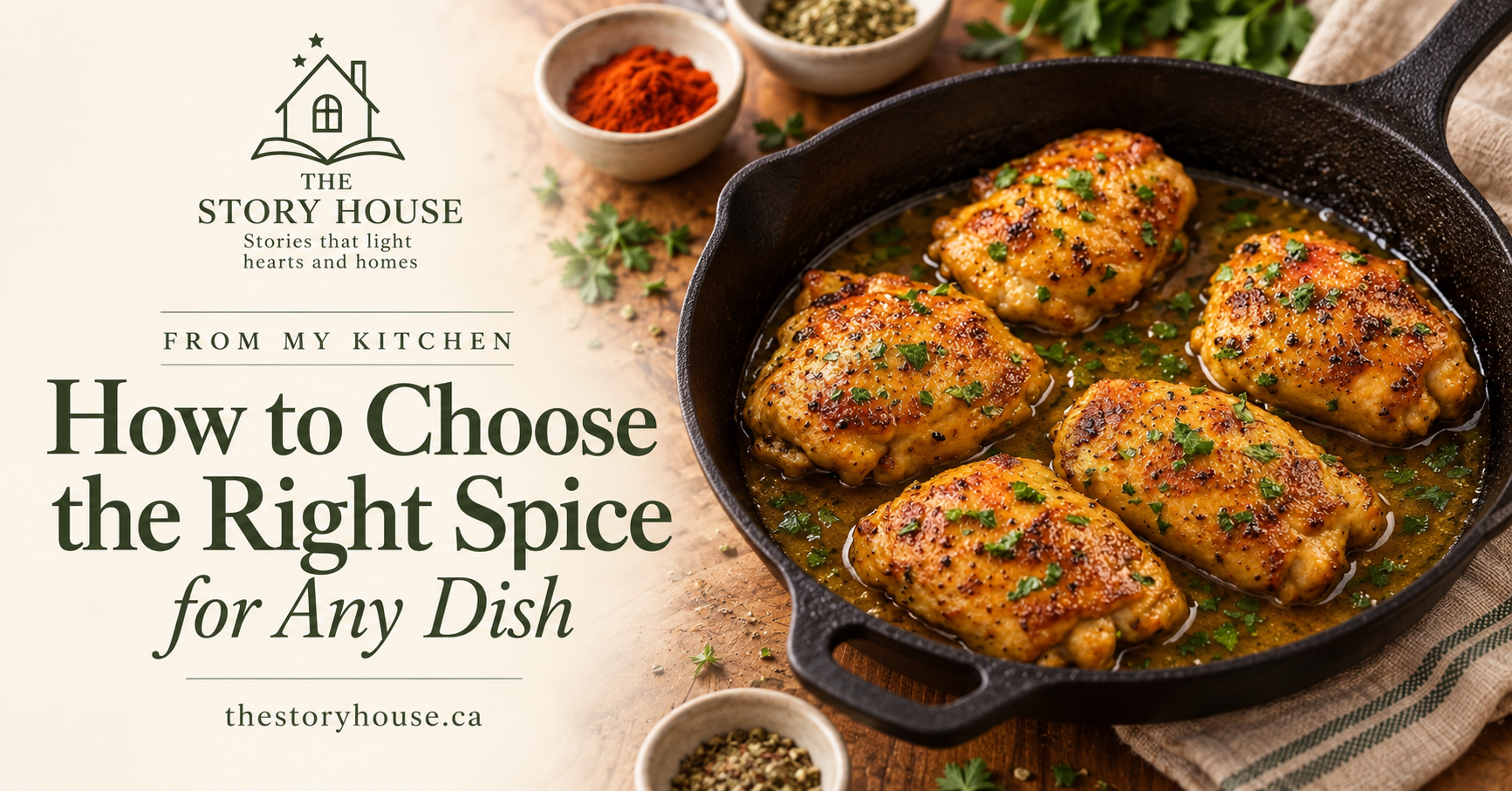
How to Choose the Right Spice for Any Dish
How to Choose the Right Spice: Start With the Flavour You Want
A practical guide to building flavour and feeling more confident in your kitchen.
Choosing a seasoning can feel a little like matchmaking.
You have chicken, vegetables, or a pot of soup waiting on one side—and a cupboard full of possibilities on the other.
Do you reach for garlic? Something smoky? A familiar herb blend? And how do you know when you’ve added enough?
Learning how to choose the right spice starts with a few simple questions. What flavour do you want? What are you cooking? And how will you cook it?
You don’t need to memorise every pairing. A few useful starting points and a willingness to taste can take you a long way.
How to Choose the Right Spice: Start With the Flavour You Want
Before opening several jars, think about the meal you’re hoping to make.
Would you like something herby and bright? Warm and aromatic? Smoky? Gently sweet and savoury?
That decision narrows the choices.
For example, oregano and garlic can provide a familiar starting point for a tomato sauce. Cumin and paprika might take beans or roasted vegetables in another direction. Ginger and garlic work beautifully in many soy-based sauces.
These are starting points, rather than rules for an entire cuisine. Regional dishes and family traditions have far more variety than a single seasoning combination can capture.
Begin with a flavour you enjoy, then build from there.
Match the Seasoning to Your Main Ingredient
The same ingredient can taste completely different depending on how you season it.
Chicken can carry a lemon-and-herb flavour, a smoky rub, or a warm curry blend. Potatoes are equally adaptable.
Use this table when you need somewhere to begin.
| Main ingredient | Seasonings to consider | A simple direction |
|---|---|---|
| Chicken | Garlic, thyme, paprika, mustard blends | Herby, smoky, or sweet and savoury |
| Beef | Black pepper, garlic, rosemary, cumin | Robust and savoury |
| Fish | Dill, parsley, ginger, mild paprika | Fresh, aromatic, or gently warm |
| Potatoes | Garlic, rosemary, paprika, onion blends | Familiar, herby, or smoky |
| Beans, lentils, or tofu | Cumin, curry blends, smoked paprika, oregano | Warm, smoky, or herb-led |
| Tomato-based dishes | Basil, oregano, garlic, chili flakes | Herby with optional heat |
Start with one direction. You can always develop it further once you taste the dish.
Think About the Cooking Method
A seasoning that works in a simmering stew may behave differently on a hot grill.
For roasting and grilling, consider how long the seasoning will be exposed to heat. Blends containing sugar can darken or burn, so follow the recipe and product directions rather than assuming every blend works the same way.
In soups and stews, dried herbs have time to release their flavour into the liquid. Delicate fresh herbs often make a lovely finishing addition.
Canada’s Food Guide explains the different uses for fresh and dried herbs, including why dried herbs benefit from cooking time and fresh herbs need care at high temperatures. Canada.ca
The method matters just as much as the ingredient.
Give One Flavour the Lead
It’s easy to keep adding seasonings when a dish doesn’t taste quite right.
But more jars don’t necessarily create better flavour.
I find it helpful to choose one main direction, then add supporting flavours thoughtfully. If I’m using a prepared curry blend, for instance, I don’t need several unrelated blends competing with it.
A garlic-and-herb dish can stay fairly simple. A smoky dish may only need a little onion and pepper alongside its main seasoning.
Think about what you want to notice in the finished meal. Let that guide what you add—and what you leave in the cupboard.
Taste Before You Try to Fix It
“Something is missing” doesn’t always mean “add more spice.”
Pause and identify what you’re tasting.
- Too mild? Try a small amount of your chosen seasoning.
- Rich but a little dull? A small squeeze of lemon or splash of vinegar may add contrast.
- Too spicy? More chili won’t help; you may need to dilute the dish with suitable unseasoned ingredients.
- Too salty? Avoid adding another salted blend. Increasing the unsalted portion may be more useful.
- Too sharp or acidic? Consider the whole recipe before adjusting. Paprika or a sweet seasoning blend isn’t a universal fix.
Make one small change, stir, and taste again.
Canada’s Food Guide’s explanation of seasoning to taste offers another useful starting point. Taste only when the food is safe to sample—not while meat or poultry is still raw. Canada.ca
Let Prepared Blends Make Cooking Easier
I enjoy using A Spice Affair blends because they give me convenient flavour options for everyday meals.
A blend can be a helpful starting point when you don’t want to measure several separate spices. But it’s still worth reading the label.
Check for salt, sugar, allergens, and other ingredients that matter to your household. A garlic seasoning blend, for example, isn’t necessarily interchangeable spoon for spoon with plain garlic powder or fresh garlic.
The ingredient list helps you understand what the jar will contribute.
You can explore the blends I share through my A Spice Affair affiliate link. My code is ESA-DEB-B; check the current offer and terms at checkout.
I may earn a commission from qualifying purchases through this link at no extra cost to you.
Experiment in Small Ways
You don’t need to risk an entire pot of supper to try something new.
Set aside a small portion and test a seasoning there first. Try a familiar blend on a different vegetable. Keep a note when a combination works especially well.
A taco-style blend might become a favourite in eggs. Garlic and rosemary might make yesterday’s plain potatoes feel different. A little smoked paprika could bring another layer to a bean dish.
Confidence grows through those small discoveries.
That’s what I love about sharing ideas in From My Kitchen. There’s always another way to make familiar ingredients enjoyable.
What’s the seasoning you reach for most often—and what do you love putting it on?
Looking for something else to make? Visit the Recipe Finder in From My Kitchen to explore more recipes and find inspiration for whatever is on your table next. There is always something good waiting to be shared.
Debbie Blower 💛
Author/Illustrator
Founder of The Story House
Stories that inspire. Words that heal.