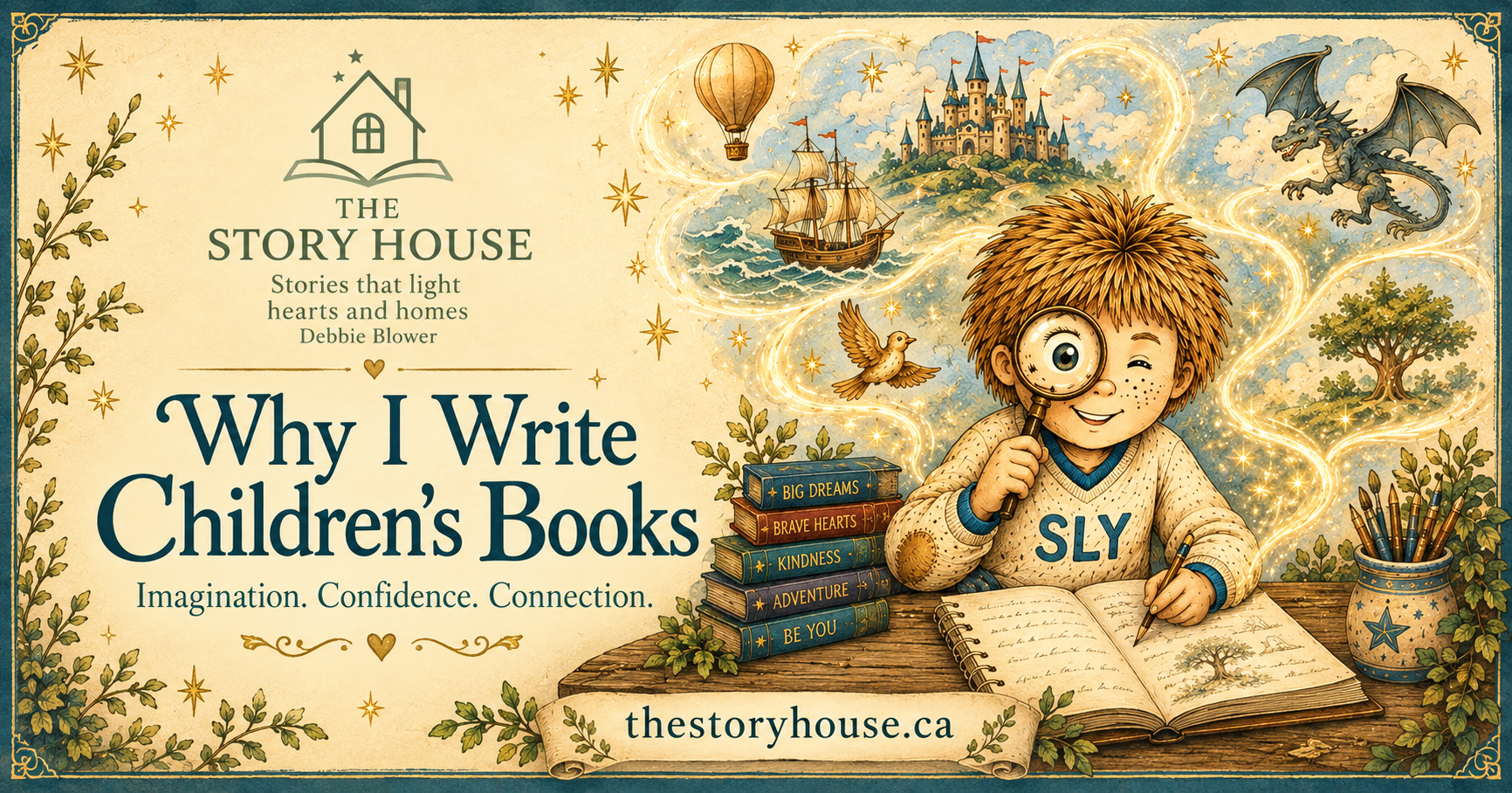
Why I Write Children’s Books
I write children’s books because I want children to experience the wonder of a good story, recognize something of themselves in a character, and discover possibilities they had not considered before. Through adventure, humour, imagination and shared reading, I hope my books give children something they want to return to—and someone they want to read with.
As an author, illustrator and Nana, I see stories as part of the life we share with children. They belong in quiet bedtime moments, lively conversations, unexpected questions and the familiar request to read a favourite book again.
That is why writing for children matters so deeply to me.
Why I Write Children’s Books With Imagination and Heart
A story gives a child somewhere to go. It might lead into a mysterious forest, a summer camp, a backyard discovery or an adventure that begins when something goes wonderfully wrong.
But the setting is only part of what holds us.
We keep reading because we care about someone inside that world. We wonder what they will do, whether they will find help, and how they will handle the problem in front of them.
When I write children’s books, I want to make room for that curiosity. I want readers to enjoy the adventure while finding characters who can be uncertain, make mistakes, ask questions and try again.
A child does not have to understand every theme in a book to enjoy it. First, there needs to be a story worth following.
Stories Were Part of My Work Before The Story House
Long before The Story House, I worked with young people through reading, writing and storybuilding.
Years ago, I co-founded The Muse Program, a creative writing and arts-based literacy program. That work gave children opportunities to explore ideas through storytelling, imagination and creative expression.
The heart of it has stayed with me.
A child who struggles to begin may need a question they can answer. Another may need to draw a character before finding the words. Someone who believes they have no ideas may begin talking once the pressure to produce a finished story eases.
Those beginnings matter to me because they give us something to encourage. We can listen to the idea, ask about it and help the child decide where to take it next.
That foundation continues through The Story House. You can read more about the connection on the About The Story House page.
I Write to Leave Room for Wonder
I love the way children can look at something ordinary and imagine an entirely different possibility.
A stone might hold a secret. A backyard might become a place to investigate. A strange sound might be the beginning of a mystery.
That way of noticing belongs in stories.
When I write children’s books, I want to leave room for readers to wonder alongside the characters. They might guess what happens next, imagine another ending or finish the book with a question of their own.
Sometimes that curiosity carries beyond reading. A child begins drawing a place from the story or inventing a new adventure for a favourite character. They start discovering what they might create themselves.
This is also part of the thinking behind Storybuilding With Imagination: Helping Children Create Stories.
I Write Characters Who Have Feelings Too
Children experience worry, excitement, disappointment, jealousy, affection and courage, sometimes before they have the words to explain them.
A character offers someone to think about. Why did they walk away? What made them afraid? Would we have made the same choice?
I want my characters to have room for those questions. They do not need to make the right decision immediately. They can misunderstand something, need reassurance or discover that being brave still involves feeling afraid.
When reading together, an adult can follow the child’s interest with a simple question:
“What do you think that character needed?”
There does not have to be a lesson after every chapter. Sometimes a child wants to talk. Sometimes they simply want to find out what happens next. Both responses have a place.
I Write to Make Reading Feel Welcoming
Not every child reaches for a book eagerly. Some need help finding a subject, character or style that catches their attention.
One reader may love humour. Another wants a mystery. Some enjoy pictures throughout a story, while others are ready to settle into a longer adventure.
I keep those different readers in mind when I write children’s books. I want to offer welcoming places to begin, while respecting that no single book will suit every child.
For families choosing books, Reading Rockets’ Finding the Right Book for Your Child offers practical guidance about interests, reading level and reading together when a book needs adult support. Reading Rockets
Sometimes the most useful question is simply, “What would you like to read about?”
You may also enjoy How to Help Children Fall in Love With Reading.
I Write for the Moments We Share
As a Nana, I treasure the opportunities stories give us to spend time together.
Reading can make space for a child to interrupt with a question, notice a tiny detail in an illustration or explain why they think a character is making a terrible decision. Those conversations are part of the pleasure.
A familiar book can become part of a family’s rhythm. The words become recognizable. Someone knows when the funny part is coming. A child insists that a particular voice must be used.
For young children, the Canadian Paediatric Society encourages families to make reading, speaking and singing part of everyday life. Its parent resource, Read, Speak, Sing to Your Baby, offers ways to begin sharing language and books from birth. Caring for kids
That shared experience is part of why I write. I like to imagine a book becoming something a child and an adult enjoy together.
I Write About Trying Again
I am drawn to characters who do not have everything figured out.
A plan fails. A friendship becomes complicated. Someone follows the wrong clue or realizes they need help. What interests me is the choice that follows.
Does the character listen? Try another approach? Admit a mistake? Make room for someone else’s idea?
Those choices give a story movement and give readers something to consider. I want children to encounter characters who can struggle and still participate in what happens next.
The adventure should remain enjoyable. Encouragement can grow through the story without stopping it for a speech.
From Reading Stories to Creating Them
My interest in children’s books also reaches into helping children create stories of their own.
That is where Sly and The Imagination Series come in.
Sly is a curious guide who encourages children to notice, wonder and explore a beginning. The series currently includes How Stories Grow with Sly and The Stories Hiding Inside, with opportunities for drawing, conversation, story prompts and writing.
These resources carry forward something I valued in The Muse Program: giving children support while leaving the ideas in their hands.
A child can begin with a memory, an unusual object, a character or a “what if?” question. An adult can listen and help with the practical parts without deciding the whole story for them.
You can meet Sly here or explore The Imagination & Story Growing Resources.
The Stories I Hope Children Carry With Them
I cannot decide what each reader will remember. A detail I consider small may be the very thing a child loves most.
Perhaps they remember a funny moment. Perhaps they recognize a character’s worry. Perhaps they want to visit the setting again or tell someone about an unexpected discovery.
My hope is that they leave the book with something that belongs to them: a favourite character, a question, an idea or the pleasure of having enjoyed a story.
That is enough reason to keep creating.
Explore Children’s Books at The Story House
If you are looking for stories to share with a child, visit Children’s Books at The Story House.
You will find different kinds of adventures and reading experiences, with imagination, friendship, discovery and encouragement woven through them.
For children who want to create their own stories, The Imagination & Story Growing Resources offers another place to explore.
Frequently Asked Questions
Why do I write children’s books?
I write children’s books to share imaginative stories that children can enjoy, connect with and wonder about. My work as an author, illustrator and Nana, along with my earlier experience in storybuilding, shapes the books I create.
How did The Muse Program influence my writing?
Co-founding The Muse Program helped shape my approach to encouraging children’s ideas and creative expression. That foundation continues through The Story House and The Imagination Series.
Are all my children’s books for the same age group?
No. The Story House includes different reading experiences, from picture books to longer adventures and creative writing resources. The individual book pages help families choose an appropriate starting point.
Who is Sly?
Sly is the curious guide in The Imagination Series. He helps introduce opportunities for children to explore story ideas through questions, drawing, conversation and writing.
Can adults enjoy these books with children?
Yes. Shared reading is part of the experience I hope to encourage. Parents, grandparents, teachers and caregivers can enjoy the stories with children and follow the conversations that arise.
A Gentle Reflection
Think about a children’s book that has stayed with you.
Do you remember the illustrations, a particular character or the anticipation of hearing the next chapter? Perhaps you remember the person who read it and the place where you sat together.
Those memories help explain why I write children’s books. I want to contribute stories that families can enjoy and children can make their own.
There is room for adventure, laughter, uncertainty and discovery—and always room for another curious reader.
Debbie Blower 💛
Author/Illustrator
Founder of The Story House
Stories that inspire. Words that heal.