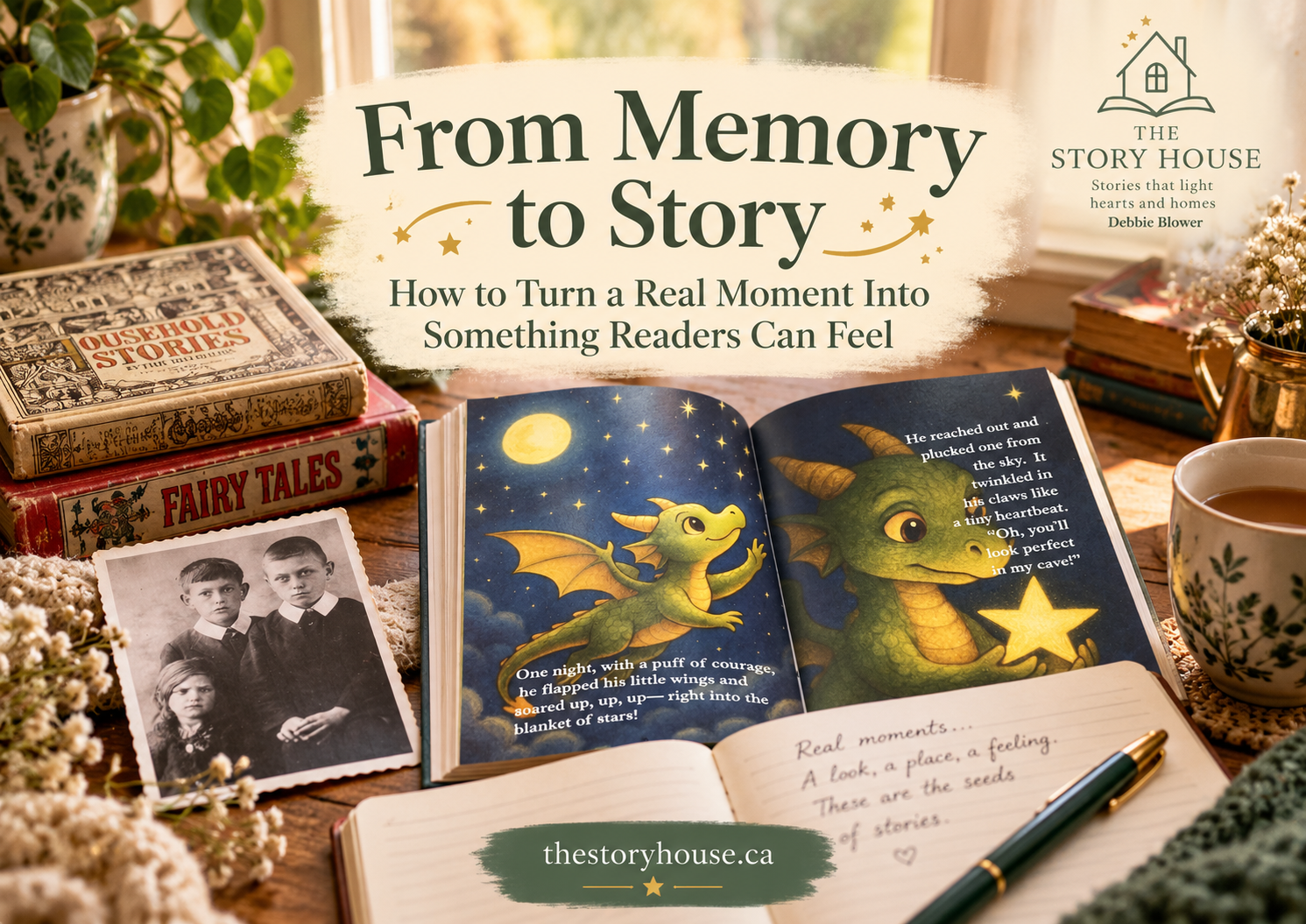
From Memory to Story: How to Turn a Real Moment Into Something Readers Can Feel
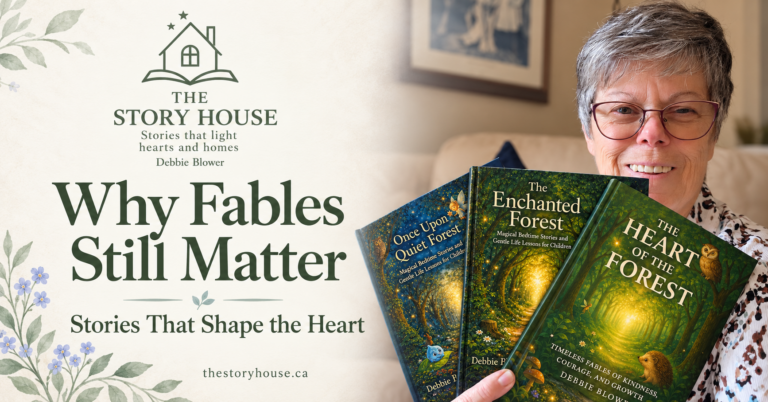
When my children were young, we read a lot of fables.
One of the things I loved about those stories was the way they could teach something important without making a child feel as though they were being taught a lesson.
There might be a message about kindness, honesty, courage, choices or consequences, but the lesson lived inside the story. The child was following the characters and wondering what would happen next. Somewhere along the way, the meaning settled in too.
I carried that with me.
That journey from memory to story is something that happens often in my writing. A remembered moment may be where an idea begins, but it is the meaning behind the memory that helps the story grow.
Years later, that same belief became part of the thinking behind my Enchanted Forest Fable
Series, including The Enchanted Forest. The stories are not a retelling of one particular afternoon from my children’s childhood. Instead, they grew from something I remembered and valued—the belief that a story can entertain a child while quietly leaving something meaningful behind.
You can explore The Enchanted Forest Fable Series here. The Enchanted Forest Fable Series.
And I think that is an important distinction when we talk about how to turn a memory into a story.
A memory does not always have to be recreated exactly as it happened.
Sometimes the memory is simply where the story begins.
A Memory Is the Beginning, Not Necessarily the Whole Story
If I were simply recording a fact, I might write:
When my children were young, we read many fables.
That tells you what happened.
But when I begin asking myself why that memory stayed with me, something deeper starts to appear.
I remember what I loved about those stories. I remember noticing that children could absorb values and lessons through the story itself. I remember believing there was something special about allowing the meaning to unfold naturally rather than explaining everything to them.
Now there is more than a fact.
There is a reason the memory matters.
That is often where a story begins.
To turn a memory into a story, begin with what stayed with you, then look for the details, feelings and meaning surrounding it. Let the senses lead you back into the moment, use facts to deepen what you remember, and decide what kind of story you are actually telling before you begin filling in the gaps.
Let the Senses Open the Door
Moving from memory to story often begins with one small sensory detail that brings the moment back to life. For me, memories do not arrive in only one way.
Sometimes it is something I see.
Other times it might be a sound, a smell, a taste, a texture or simply a feeling that brings something back.
There is no one correct doorway into a memory.
A photograph can do the same thing. It may remind us of the room around the picture, the person who was standing just outside the frame, or something that happened before or after the photograph was taken. Creative Nonfiction’s writing resources describe photographs as memory touchstones that can help writers begin with a concrete moment and then expand through description and reflection. Creative Nonfiction
Creative Nonfiction: Writing From Photographs
That is why I do not think a writer always has to begin by asking, What happened?
Sometimes better questions are:
What do I still see?
What sound comes back first?
What did that place feel like?
What is the one little detail I have never forgotten?
A small sensory detail can sometimes lead us back to far more than we expected.
Let the Facts Wake Up the Memory
My stories often begin as drafts and then deepen as I gather facts.
That process matters because one fact can unlock another memory.
A date might remind me where we were living.
An old photograph might bring back the room.
A name might remind me of another person who was there.
A letter, newspaper clipping or family record might answer one question while creating three more.
This was particularly important when I wrote The Boy With The Tin Trunk. That story could not rely on memory alone. It grew through family history, records, remembered fragments and historical context surrounding my father’s life. The current book page describes the story as one reconstructed through family records, memories and historical context. The Story House
Explore The Boy With The Tin Trunk
The research did more than give me dates and facts. That movement from memory to story often happens slowly. One fact can awaken another memory, and that memory can lead to another piece of the story I had almost forgotten.
It helped me understand the human story around them.
That is one of the reasons I think memory and fact can work so beautifully together. A fact can tell us what happened. Memory can help us understand what it meant.
Decide What Kind of Truth You Are Writing
This is where I think writers need to be careful.
There is a difference between writing a memoir or true family story and writing fiction that has been inspired by something real.
If I am writing about something that actually happened and I cannot remember the exact words someone spoke, I do not want to put invented words inside quotation marks and present them as fact.
I would rather describe what was said.
Perhaps I remember that someone warned me not to do something, encouraged me, disagreed with me or told me something important. I can write the meaning of that conversation without pretending I remember every word.
That matters to me.
Purdue University’s overview of creative nonfiction makes a similar distinction: creative nonfiction can use many of the storytelling techniques we associate with fiction, but its foundation remains truthful experience. Purdue OWL
Purdue OWL: An Overview of Creative Nonfiction
Creative Nonfiction’s essay “Truth” explains why factual honesty matters when telling a true story. Changing people or events to make a scene more dramatic can damage the reader’s trust. That is a helpful reminder when I am deciding which details I can honestly include.
For me, the simplest question is:
Am I asking the reader to believe this happened exactly this way?
If I am, I need to honour that trust.
Fiction Inspired by Memory Gives Us Different Freedom
Children’s fiction can work differently.
A story might grow out of something my children or grandchildren did, a place I remember, a childhood experience, or something I noticed years ago.
But if I am not presenting the book as a true account of that event, I have room to create.
Characters can have conversations that did not happen word for word.
Settings can change.
Several moments can inspire one scene.
Imagination can step in.
That does not mean the memory has disappeared.
It may still be the heart underneath everything.
That is what happened with the idea behind my Enchanted Forest stories. The memory of reading fables with my own children did not give me a transcript to reproduce.
It gave me a belief about storytelling.
A child can discover a lesson through a story instead of having the lesson explained to them.
That became something new.
Find the Meaning Before You Add the Details
The shift from memory to story becomes much easier once you understand why the moment stayed with you in the first place.
One temptation when writing from memory is to think that more detail automatically makes the writing better.
It doesn’t.
The details have to belong.
Before adding everything you can remember, ask yourself what the story is really about.
The childhood fable memory is not really about which book we held or what room we were sitting in.
The important part, for this story, is what those books taught me about writing for children.
Another memory might be about belonging.
Or grief.
Or courage.
Or family.
Or discovering something about someone you thought you already knew.
Once you understand that, choosing the right details becomes much easier.
The details are there to help the reader feel the meaning—not bury it.
Sometimes the Smallest Memory Holds the Story
I do not believe a memory has to be dramatic to become meaningful writing.
Many of the stories worth keeping are ordinary.
A parent making supper.
A grandfather’s favourite saying.
Something funny a child said.
The smell of bread baking.
A family trip.
An old photograph.
A book read together.
Something that seemed completely ordinary when it happened can become precious years later.
That is one reason family stories matter so much to me. I wrote more about that in Why Family Stories Matter More Than We Realize, particularly how memories, photographs and everyday moments carry pieces of who we are.
Read Why Family Stories Matter More Than We Realize
Sometimes we do not recognise the story while we are living it.
We recognise it when we look back.
A Simple Way to Turn a Memory Into a Story
When you have a memory you want to explore, you can begin very simply:
- Write the memory as you remember it. Do not worry yet about making it beautiful.
- Notice what comes through the senses. What can you see, hear, smell, taste, touch or feel?
- Gather what you can verify. Photographs, dates, letters, family conversations and records may deepen the memory.
- Ask why this moment stayed with you. That answer may reveal what the story is actually about.
- Decide whether you are writing truth or fiction inspired by truth. That decision changes how freely you can recreate scenes and dialogue.
- Choose only the details that help the reader enter the moment. You do not need everything—only what helps the story live.
This way of finding stories in ordinary experiences is also woven through my Imagination & Story Growing Resources, where children are encouraged to discover that memories, questions and everyday moments can become story seeds.
Explore Imagination & Story Growing Resources
From Memory to Story — and Then to Imagination
Long before The Story House, this same way of thinking shaped The Muse Program.
Children were encouraged to begin with pictures, feelings, questions, visualization, fables and imagination rather than worrying first about getting every word right. The program used storytelling, fables, mythology, visual art and creative prompts to help children find their own ideas.
Read the Story of The Muse Program
I think adults sometimes need the same permission.
We do not always need to begin with a perfectly formed story.
We can begin with the fragment.
The picture.
The smell.
The feeling.
The thing someone once told us.
The moment we cannot quite explain why we still remember.
Then we follow it.
Help the Reader Feel Why It Mattered
There is a difference between writing:
This happened.
and writing:
This mattered.
That difference is often where storytelling lives.
We do not have to exaggerate a memory to make someone feel it.
We do not need to invent drama that was never there.
Instead, we can slow down long enough to notice what made the moment important to us.
What changed?
What did we understand afterwards that we did not understand before?
What did we carry forward?
In my case, reading fables with my children left behind a belief about storytelling that remained long after those particular reading years had passed.
Stories can teach without preaching.
They can open conversations.
They can quietly plant ideas, that can carry the value into adult years.
And sometimes, years later, one of those memories becomes the seed of another story altogether.
Frequently Asked Questions
How to Turn a Memory Into a Story?
If you are wondering how to turn a memory into a story, begin with the part of the memory that has stayed with you. Add sensory details you genuinely remember, gather any facts that can help deepen the scene, and ask yourself why the moment still matters. The story usually grows from that meaning rather than from recording every detail.
What if I cannot remember the exact dialogue?
If I am writing nonfiction, I prefer to describe what was said rather than invent quotation marks around words I cannot honestly remember. If I am writing fiction inspired by a memory and the story is not presented as a true account, recreated natural dialogue can be part of the storytelling.
Can I change details when a story is based on a real memory?
That depends on what you are writing. Fiction inspired by real life gives you room to change characters, settings, dialogue and events. Memoir and true family stories require more care because the reader understands that you are presenting real experiences.
Can an ordinary memory become a good story?
Absolutely. Often the quietest memories carry the greatest meaning because they hold relationships, traditions, emotions or moments we did not realise were important until later.
Do I need to remember everything before I begin?
No. Begin with what you have. Writing the first draft, looking at photographs, checking facts and talking with family can sometimes bring other memories forward.
Moving from memory to story is not about making an ordinary moment sound more dramatic than it was. It is about discovering why the moment remained with us and finding the words that allow someone else to understand its meaning.
What Memory Is Waiting for You?
Going from memory to story is not about making an ordinary moment bigger than it was. It is about recognising what mattered and finding a way to help someone else feel it too.
Perhaps there is a moment you have carried for years without ever thinking of it as a story.
It may not look important from the outside.
That does not mean it isn’t.
Begin with what you remember.
Follow the detail that keeps returning.
Let the facts deepen it.
Be honest about what you know and what you do not.
Then ask yourself one more question:
Why has this moment stayed with me?
Very often, the answer is where the story has been hiding all along.
Debbie 💛
Canadian Author/Illustrator
Founder of The Story House